
Public sector leadership coaching works differently from corporate coaching, and the reasons are practical. Public leaders answer to ministers, boards, unions, media, and citizens at the same time. They rarely control their budgets. They cannot offer bonuses or fire quickly. A coaching model built for a private-sector CEO often fails in this setting.
This article explains what makes public service leadership different. It also shows what a better coaching approach looks like and how to start.
What Makes Public Sector Leadership Different?
Public sector leaders carry enormous responsibility. McKinsey reports that they manage about one-third of the global workforce and oversee around a quarter of global GDP. Yet research on what makes them effective is scarce.
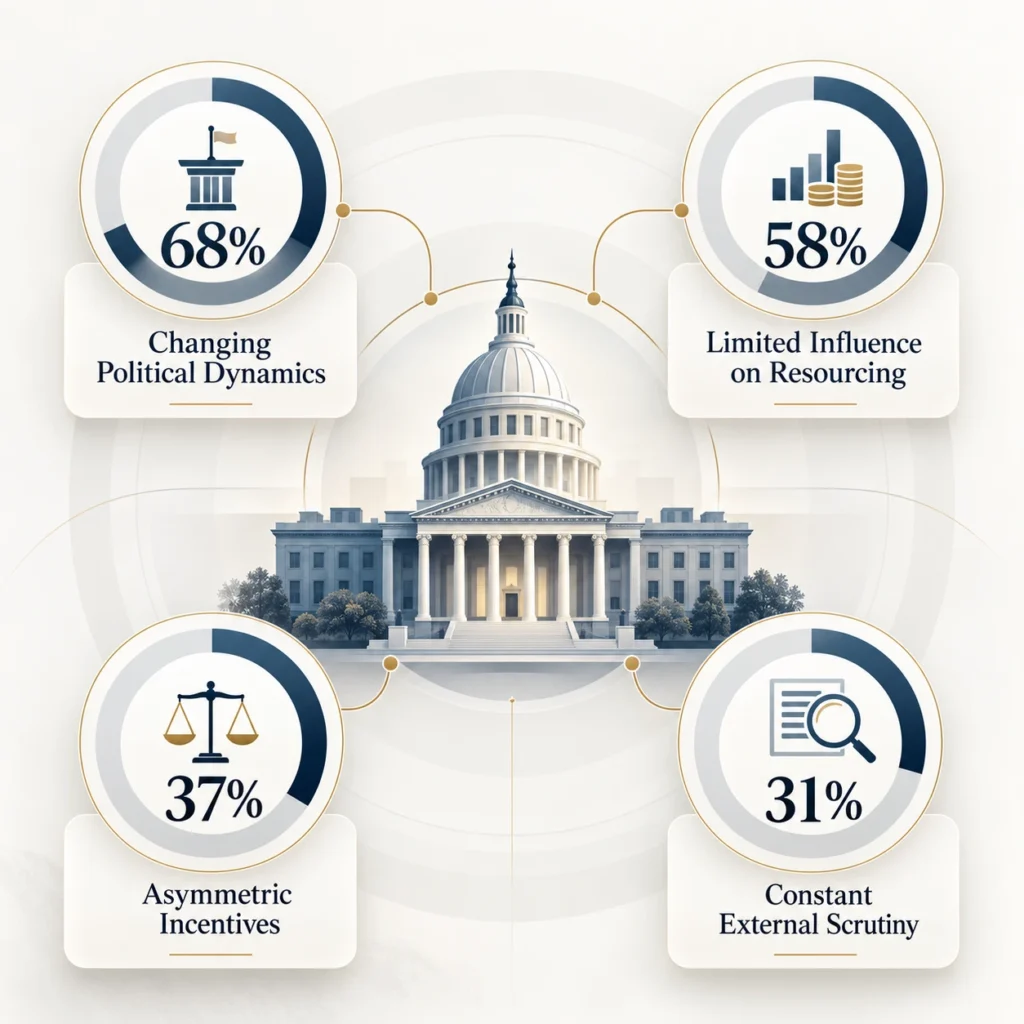
McKinsey surveyed 753 leaders to find out what sets their work apart. The top answers were:
- Changing political dynamics: 68%
- Limited influence on resourcing: 58%
- Asymmetric incentives: 37%
- Constant external scrutiny: 31%
Notice what is missing from that list. Market share, quarterly profit, and shareholder pressure do not appear. Public leaders face a different game, so they need different support.
Other research points the same way. A study of 42 senior managers in Indian public sector undertakings found three recurring challenges: political interference with limited autonomy, rigid rules and HR practices, and low employee motivation.
Why Standard Executive Coaching Falls Short?
Most executive coaching programs assume a leader who owns the strategy, the budget, and the people decisions. Public leaders often own none of the three outright.
Here is where the corporate model breaks down:
- Goals are different. A coach may push “growth” or “profit.” A public leader needs public trust, policy delivery, and service quality.
- Authority is shared. Decisions pass through committees, legislatures, and approval chains.
- Timelines clash. Elections and budget cycles shape what leaders can finish.
- Motivation tools are limited. Leaders cannot lean on bonuses or equity. They must build commitment through purpose and trust.
Coaching that ignores these facts gives advice leaders cannot use. Worse, it can leave them feeling that coaching “doesn’t get” their job.
The Political Layer Changes Everything
Politics is the biggest difference. Public leaders work with elected officials and political staff whose priorities shift often.
A survey from the Institute of Public Administration of Canada captures this tension. Respondents worried about politicization described delivering negative messages to stakeholders and “becoming the face of the government” for political decisions in front of the media. One respondent said political staff work from a political calculus, while the bureaucracy looks for lasting policy influence.
Good coaching helps leaders handle this tension. It builds skills such as:
- Advising political leaders honestly without damaging the relationship
- Staying neutral while still driving results
- Managing public messaging under pressure
- Protecting team morale when priorities change overnight
What Effective Public Sector Leadership Coaching Includes?
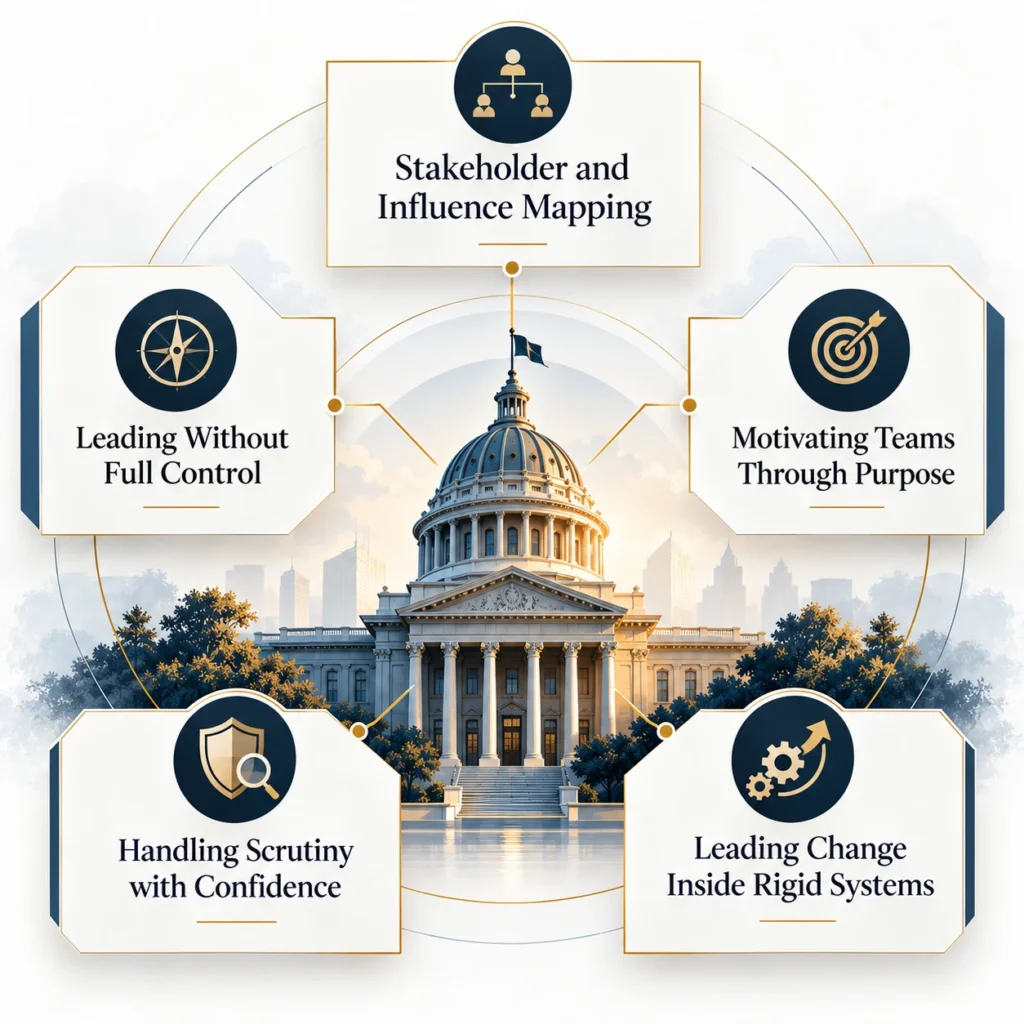
A strong program starts with the leader’s real operating environment. It covers these areas.
1. Stakeholder and influence mapping
Public leaders serve many stakeholders with competing demands. A coach helps them map who holds power, who holds opinions, and who can block progress. Then they build a plan to influence each group.
2. Leading without full control
Leaders need strategies for results when they cannot hire, fire, or fund freely. Coaching focuses on persuasion, coalition building, and creative use of limited resources.
3. Motivating teams through purpose
Public servants often join for mission, not money. The IIMA study found that public service motivation, job security, and work environment kept leaders in their roles. Coaches help leaders connect daily work to public impact and keep teams engaged.
4. Handling scrutiny with confidence
Media, auditors, and oversight bodies watch every decision. Coaching builds composure, clear communication, and decision-making habits that hold up under review.
5. Leading change inside rigid systems
Reform rarely happens through a single directive. Coaches help leaders find small, winnable changes and build momentum inside existing rules.
How the Coaching Process Works?
The process mirrors other executive engagements, with sector-specific adjustments. It usually runs through assessment, goal setting, regular one-on-one sessions, and progress reviews. If you want the full framework, read our complete guide: Executive Coaching: What It Is, How It Works, and Who It’s For.
For public leaders, three adjustments matter most:
- Define success in public terms. Examples include service delivery, stakeholder trust, and team engagement.
- Protect confidentiality. Leaders must speak freely about political and organizational pressures.
- Build in flexibility. Crises, elections, and budget deadlines will interrupt the schedule.
Does Coaching Deliver Results?
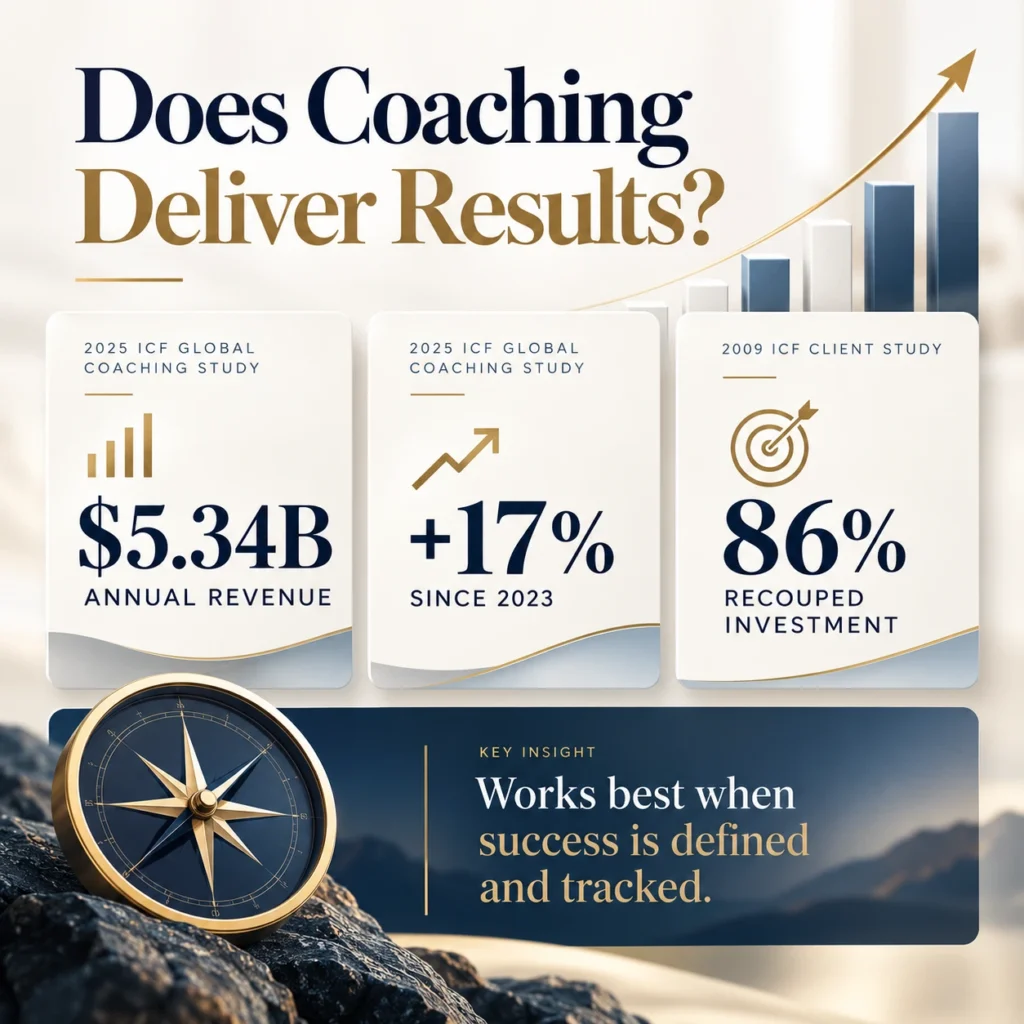
The wider coaching industry keeps growing, which signals strong demand. The 2025 ICF Global Coaching Study reports $5.34 billion in annual revenue, a 17% rise since 2023. The study also says coaching works best when organizations define and track success.
Older data points to financial value. In the 2009 ICF Global Coaching Client Study, 86% of companies reported that they at least recouped their investment in coaching. That research focused on companies, so public bodies should set their own measures. Useful ones include:
- Staff engagement scores
- Project delivery on time
- Stakeholder feedback
- Leader retention and succession readiness
Who Benefits Most from This Approach?
Public sector leadership coaching fits leaders such as:
- Directors, deputy directors, and department heads
- Municipal and city managers
- Heads of public agencies and authorities
- Program and project leaders in government-funded bodies
- Newly promoted leaders who moved up from technical roles
How to Choose the Right Coach
Look for these signs of a good fit:
- Credentials: Check for recognized coaching training and an ICF-aligned code of ethics.
- Sector understanding: Ask how the coach handles political and regulatory pressure.
- Clear process: Expect defined goals, session structure, and progress checks.
- Confidentiality: Ask how the coach protects what you share.
Our Leadership Coaching Services page explains how we match coaching programs to each leader’s role and goals.
Conclusion
Public sector leadership coaching works when it respects the real job: shared power, political change, tight budgets, and constant scrutiny. Generic corporate advice cannot meet those demands. A tailored approach gives leaders practical tools they can use on Monday morning.
If you lead in the public sector and want coaching built for your reality, explore our Leadership Coaching Services. Book a discovery call, share your biggest leadership challenge, and leave with a clear plan for your first 90 days.