

Executive coaching for emerging and senior leaders looks similar on paper. Both involve one-on-one sessions, clear goals, and honest feedback. In practice, the two groups need very different things. A new manager needs to learn how to lead people. A CEO needs to see what no one around them will say out loud.
This guide explains how coaching changes at each career stage. You will see what each group struggles with, what a coach focuses on, and how to pick the right path.
Emerging Leaders vs. Senior Leaders Coaching?
Coaching for emerging leaders builds core leadership skills. Coaching for senior leaders builds perspective, influence, and strategic judgment.
| Emerging leaders | Senior leaders | |
|---|---|---|
| Main shift | From doer to people leader | From operator to enterprise leader |
| Core focus | Delegation, feedback, communication | Strategy, politics, legacy, board relations |
| Biggest risk | Micromanaging or avoiding conflict | Isolation and blind spots |
| Coach’s role | Guide and skill builder | Sounding board and challenger |
| Success measure | Team confidence and results | Organizational impact and succession |
For the full framework behind these programs, read our pillar guide: Executive Coaching: What It Is, How It Works, and Who It’s For.
What Emerging Leaders Struggle With?
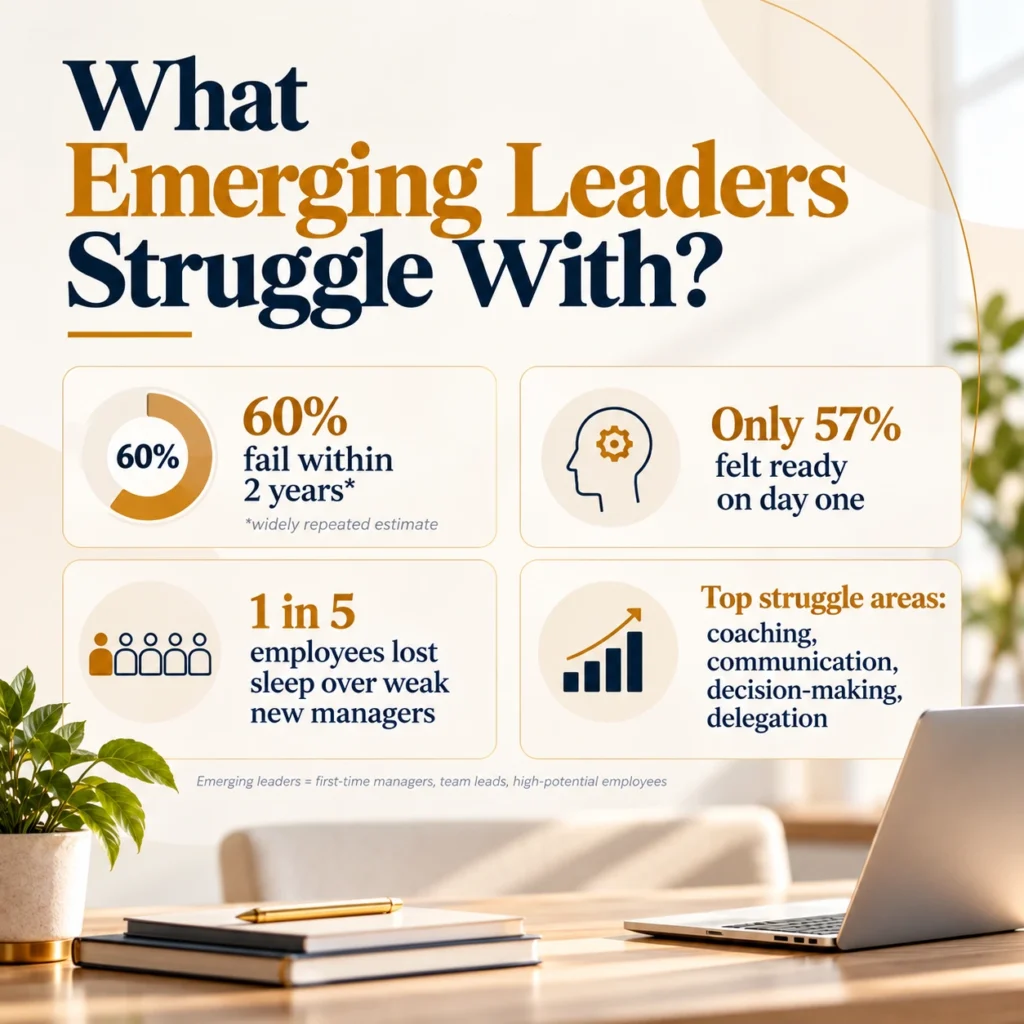
Emerging leaders include first-time managers, team leads, and high-potential employees moving into bigger roles. Most earned the promotion by being great at their old job. Leading people is a different skill.
Skill Gaps in the First Two Years
The numbers show how hard this shift is. A University at Buffalo study surveyed 253 new managers. It found that most struggle with at least one core weakness, and many struggle with three or more. The same research cites an estimate that nearly 60% of new managers fail within two years.
Treat that 60% figure as a widely repeated estimate, not an exact count. The pattern is still clear. An older Workforce survey found that only 57% of frontline leaders felt they had the leadership skills they needed on day one. They struggled most with coaching, communication, decision-making, and delegation.
The Cost to Their Teams
The cost reaches the team too. A 2023 Oji Life Lab and Harris poll of more than 2,000 US office workers found that one in five employees lost sleep over a new manager with weak leadership skills.
What Coaching Looks Like for Emerging Leaders?
Coaching at this stage is practical and skill-based. Sessions often cover:
- Delegation: Letting go of tasks without losing quality
- Feedback: Giving clear, kind, direct input
- Conflict: Handling hard talks, including with former peers
- Time and priorities: Moving from “doing” to “leading”
- Confidence: Building a leadership identity
The Buffalo researchers also found that new managers valued mentorship and targeted competency training more than books, newsletters, and general seminars. That matches what coaching offers: personal, specific, and tied to real situations.
What Senior Leaders Struggle With?
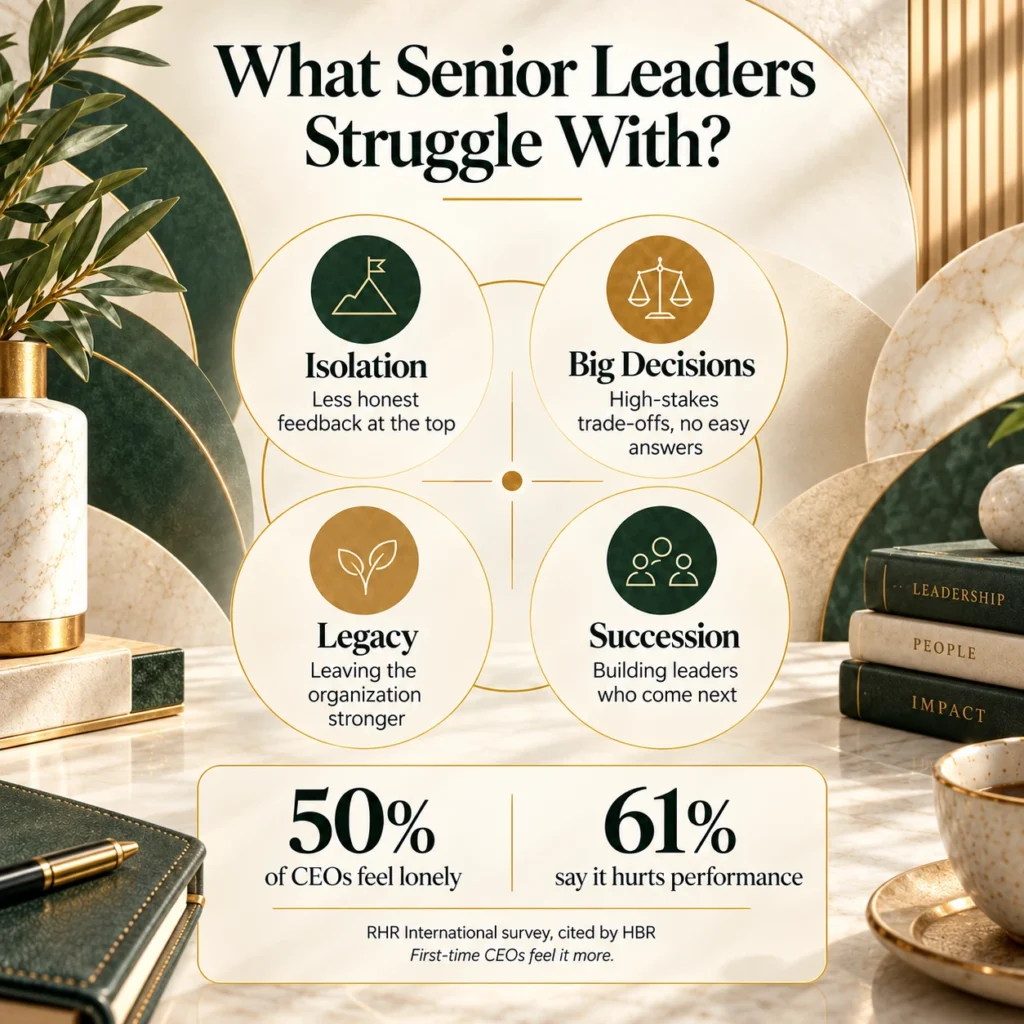
Senior leaders include directors, vice presidents, C-suite executives, and founders. They already know how to manage. Their problems sit elsewhere.
Isolation and Missing Feedback
The higher a leader climbs, the less honest feedback they get. People filter bad news. Direct reports tell them what they want to hear.
An RHR International CEO survey, cited by Harvard Business Review, found that half of CEOs feel lonely in the role. Of those, 61% believe it hurts their performance. First-time CEOs feel it even more.
Bigger Decisions, Fewer Safe Answers
Senior leaders handle trade-offs with no clean answer. They balance board expectations, investor pressure, culture, and long-term strategy. Few people in their circle have faced the same choices.
Legacy and Succession
At this level, leaders think about who comes next. They ask how to build leaders beneath them and how to leave the organization stronger.
What Coaching Looks Like for Senior Leaders
Coaching here works more like a thinking partnership. Sessions often cover:
- Strategic clarity: Cutting through noise to the few decisions that matter
- Executive presence: Influencing the board, investors, and the wider market
- Blind spots: Surfacing patterns the leader cannot see alone
- Team dynamics: Building and aligning a strong leadership team
- Succession and legacy: Growing the next generation of leaders
- Wellbeing: Managing pressure without burning out
A senior-level coach does not teach basics. The coach asks sharp questions, challenges assumptions, and holds the leader accountable.
Side-by-Side: How the Coaching Approach Changes
Coaching Style
With emerging leaders, a coach uses more structure. The coach may suggest tools, frameworks, and practice exercises. With senior leaders, the coach asks more and tells less. The leader often holds the answer and needs space to find it.
Goals
Emerging leader goals tend to be specific and near-term, such as “run better one-on-ones in 90 days.” Senior leader goals tend to be broader, such as “align my executive team behind a three-year strategy.”
Timeline
Skill-building often shows results within the first few months. Senior-level change, like shifting culture or executive presence, tends to take longer. If you want a realistic picture, see our guide on how long executive coaching takes to show results.
Stakeholders
An emerging leader’s coach mainly hears from the leader and their manager. A senior leader’s coach may gather input from the board, peers, and direct reports through 360-degree feedback.
Does Coaching Work at Both Levels?
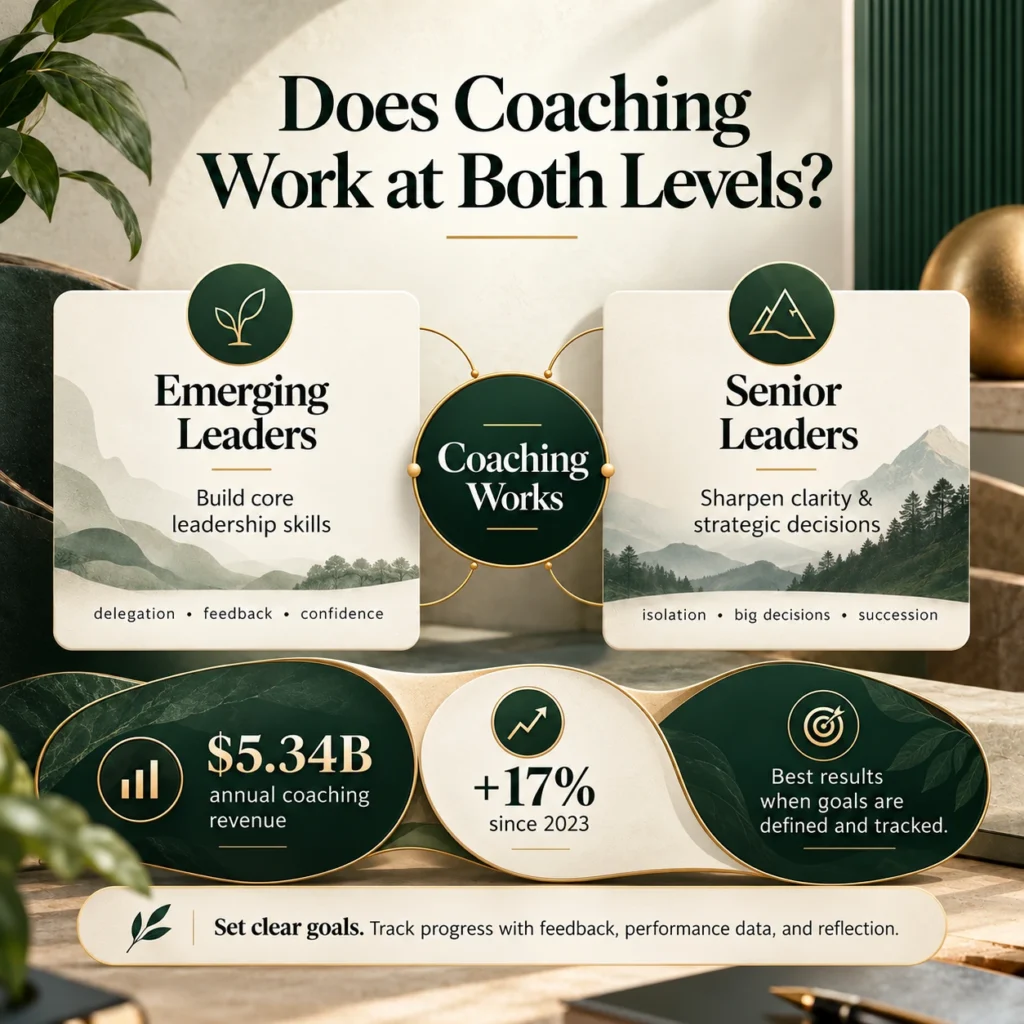
Coaching continues to grow around the world. The 2025 ICF Global Coaching Study reports $5.34 billion in annual revenue, a 17% rise since 2023. It also states that coaching works best when organizations define and track success.
That advice applies at every level. Agree on clear goals before you begin. Then measure progress with team feedback, performance data, and your own reflection.
How to Choose the Right Type of Coaching
Ask yourself three questions:
- What is my biggest challenge right now? If it is people skills, start with a skill-focused program. If it is strategy or isolation, choose a senior-level partnership.
- Who do I need around me? Emerging leaders often benefit from a coach who teaches. Senior leaders often benefit from a coach who challenges.
- What does success look like in 6 to 12 months? Define it in plain terms before you sign up.
When you compare options, review our Leadership Coaching Services. They show how programs fit different roles and goals.
Conclusion: Match the Coaching to the Leader
Executive coaching for emerging and senior leaders shares the same foundation, but the work differs. Emerging leaders need practical skills and confidence. Senior leaders need perspective, honest challenge, and room to think. The right match saves time and delivers real results.
Ready to find the right fit? Explore our Leadership Coaching Services, book a discovery call, and tell us where you stand today. You will leave with a clear next step.