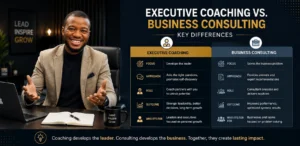

Most executives notice early shifts in thinking and communication within 4 to 6 sessions (about 2 months), measurable change others notice by day 60–90, and durable, habit-level results by month 4 to 6. Full engagements typically run 6 to 12 months.
How long executive coaching takes to show results depends on what you mean by “results.” A leader can walk into their third session and already run a meeting differently. But the kind of change that holds up during a bad quarter, when old habits usually come roaring back, takes longer to build. Here’s what that timeline actually looks like, stage by stage, and why the gap between “I tried something new” and “this is just how I lead now” is bigger than most people expect.
Haven’t decided whether coaching is worth it yet? Our pillar guide, Executive Coaching: What It Is, How It Works, and Who It’s For, covers that groundwork first.
Two Clocks, Not One
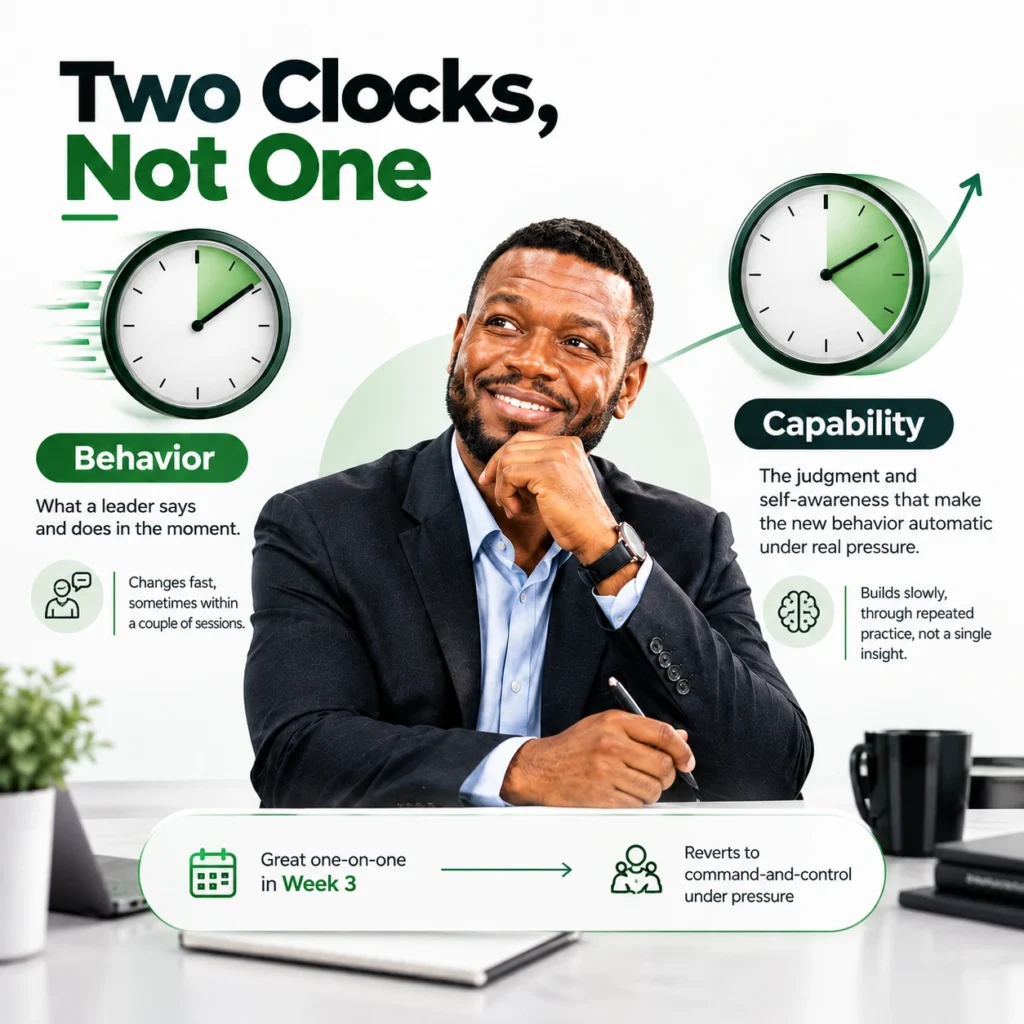
Coaching results run on two different timelines at once, and mixing them up is the main reason leaders feel disappointed a few months in.
- Behavior: what a leader says and does in the moment. This changes fast, sometimes within a couple of sessions.
- Capability: the judgment and self-awareness that make the new behavior automatic under real pressure. This builds slowly, through repeated practice, not a single insight.
A leader who runs a great one-on-one in week three but reverts to command-and-control the moment the board pushes back hasn’t failed at coaching. The behavior showed up on schedule. The capability just hasn’t caught up yet.
Weeks 1–6: The First Shifts
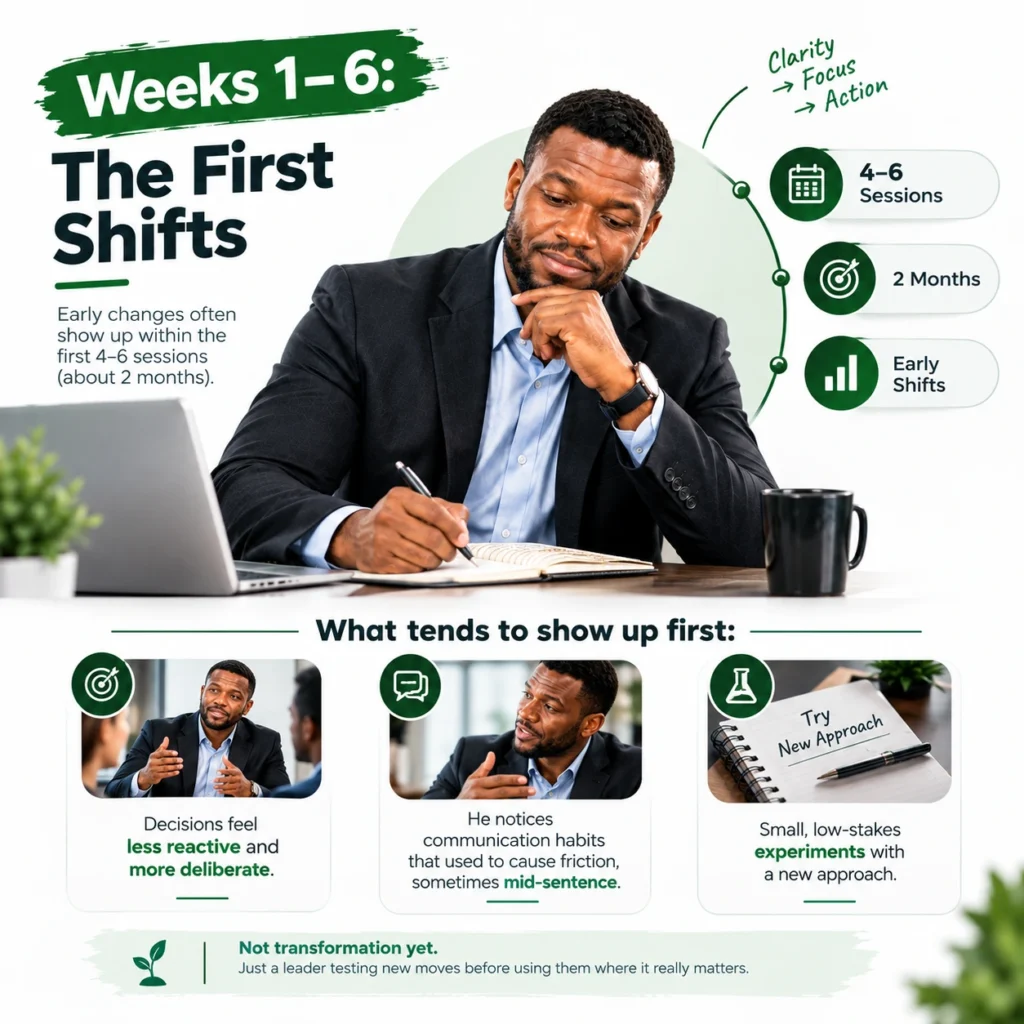
Early behavioral shifts typically show up within the first 4 to 6 sessions, roughly the first two months of coaching. Early sessions are mostly about clarity: naming the real goal, surfacing blind spots, and setting a baseline to measure against later.
What tends to show up first:
- Decisions in meetings feel less reactive and more deliberate
- The leader starts catching communication habits that used to cause friction, sometimes mid-sentence
- Small, low-stakes experiments trying a new approach somewhere the cost of getting it wrong is low
None of this is transformation yet. It’s the leader testing new moves before using them somewhere that actually matters.
Around Day 90: Change Other People Notice
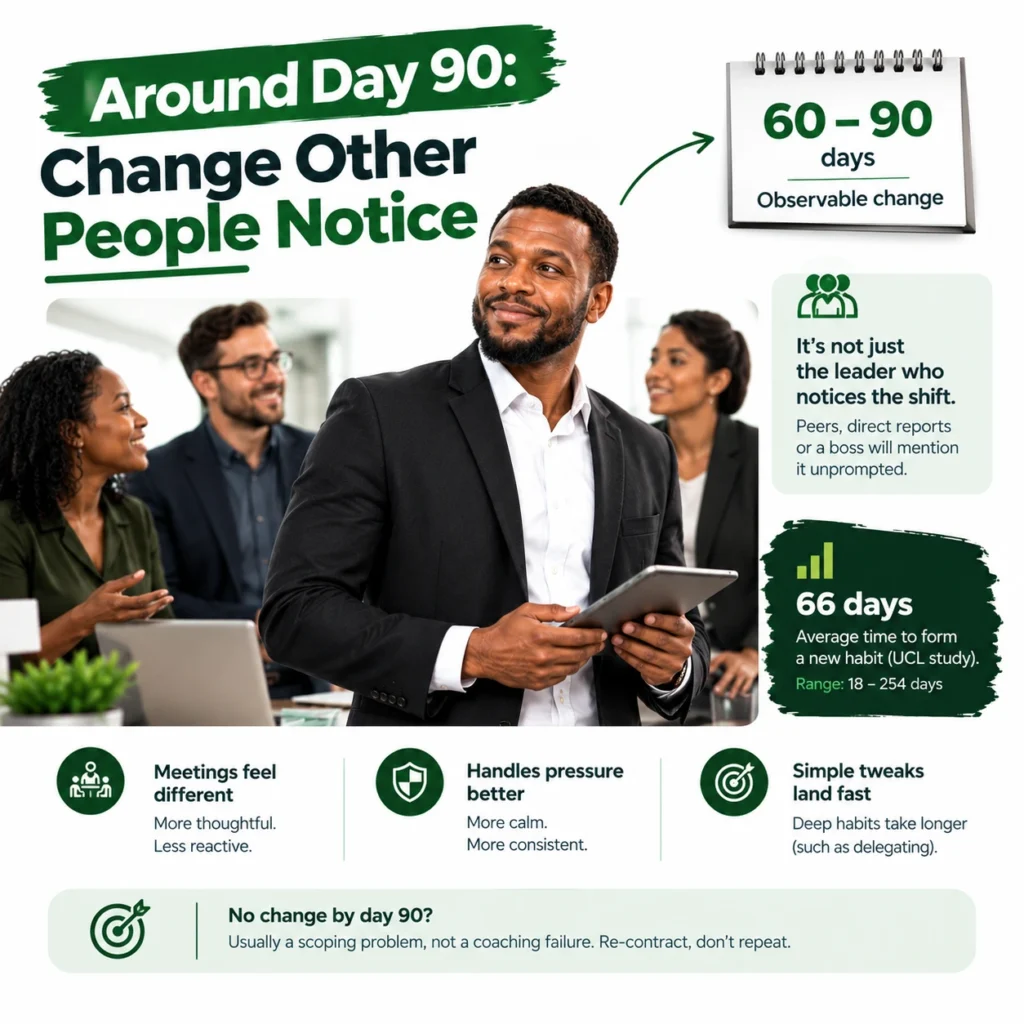
Observable, measurable change typically appears within 60 to 90 days of a well-scoped coaching engagement. By this point, it’s no longer just the leader who notices the shift. Peers, direct reports, or a boss will mention, unprompted, that meetings feel different or that someone’s handling pressure better than before.
This lines up with general habit-formation research. A widely cited study out of University College London, led by Phillippa Lally, found new habits take an average of 66 days to form, with a range of 18 to 254 days depending on complexity and consistency. Simple tweaks land fast. Deep-rooted habits, like learning to actually delegate after years of doing everything yourself, take longer for the same reason any deeply grooved habit takes longer to unlearn.
If nothing has shifted by day 90, that’s usually a scoping problem, not a coaching failure. The goal was probably too vague, and a decent coach will re-contract rather than keep running the same plan.
Month 4–6: When It Actually Sticks

This is when “I’m trying something new” becomes “this is just how I operate now.”
Stratos Coaching’s 2026 research puts numbers on it: observable behavior change shows up in 60–90 days, but it doesn’t become durable until around day 180, which is why most engagements run six months minimum.
The real test isn’t performing the new behavior in a calm session, it’s whether it survives a bad week, showing up unprompted in the meeting that went sideways.
The ICF and PwC’s global coaching study found 70% of coached executives reported measurably better performance and 80% reported more self-confidence, gains that build over six-plus months, not single sessions. The MetrixGlobal case study found the same pattern: strongest returns came from engagements of six months or more with real behavioral tracking, not a gut-feel check-in at the end.
By this stage, most leaders:
- Handle pressure with the new behavior without consciously thinking about it
- See it reflected in team engagement or performance numbers, not just self-assessment
- Shift from active development into maintaining what they’ve built
So How Long Does the Whole Thing Take?

Most executive coaching engagements run 6 to 12 months. Shorter, focused engagements of 3 to 4 months work for narrow goals: a board presentation, one specific stakeholder relationship, a skill you’re already decent at. Broader change, like a CEO reshaping how an entire organization operates, usually takes 12 to 18 months.
Seniority matters here too. A first-time manager learning to delegate can often show solid progress in three or four months. A CEO trying to unwind two decades of command-and-control instincts is working against a much bigger pile of habit, so it takes longer, not because they’re a worse leader, just because there’s more to undo.
What Actually Moves the Timeline
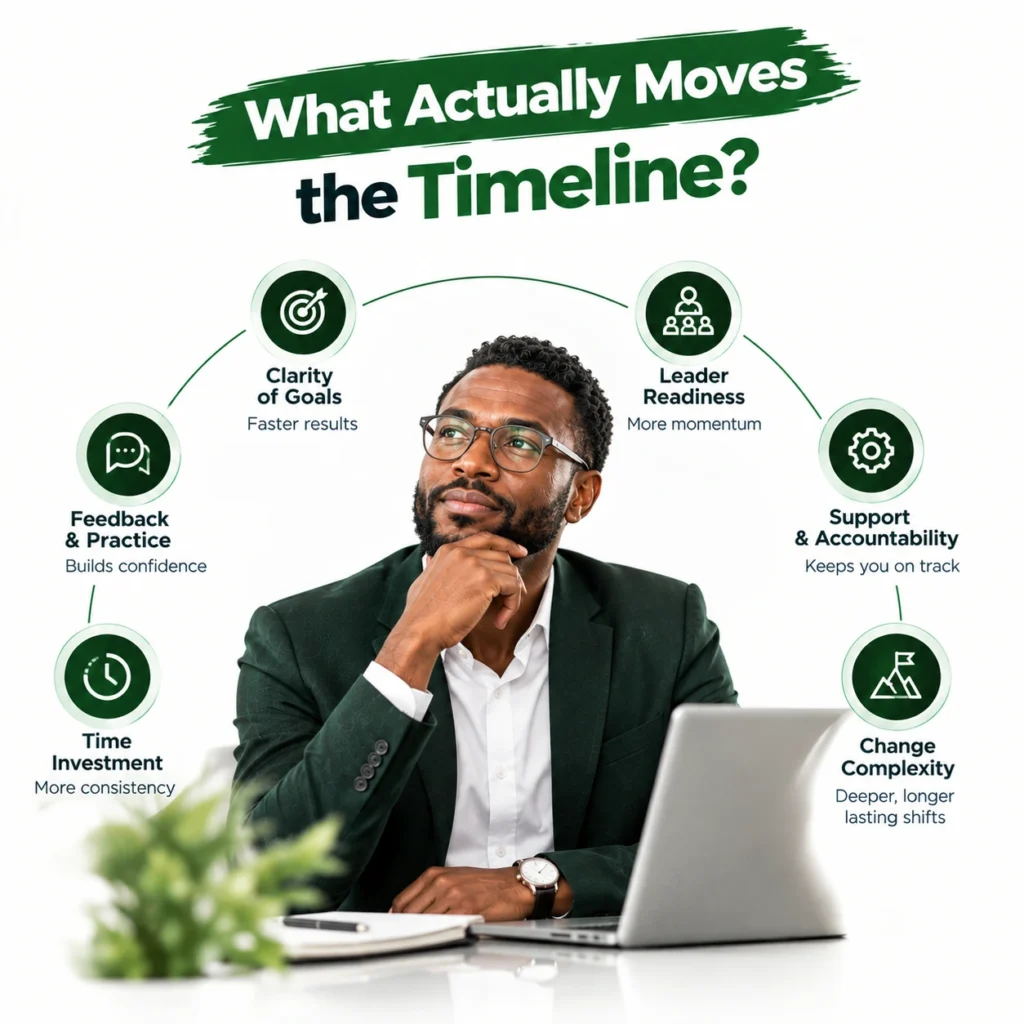
What happens between sessions matters more than the sessions themselves. Leaders who apply what they discuss to real situations, then come back and talk through what happened, see results faster than leaders who treat coaching as a nice conversation every other week.
A few things consistently speed it up:
- Willingness to sit with discomfort. Leaders who can hear hard feedback without getting defensive move faster.
- A steady rhythm. Sessions every two weeks, or even monthly, done consistently, tend to outperform an irregular schedule.
- A specific goal. “Become a better leader” is hard to measure. “Run one-on-ones people don’t dread” is something you can track.
Picking a Timeline That Fits What You Need

Before starting, be honest about what kind of change you’re actually after. Narrow and near-term goals usually need 3 to 4 months. A deeper pattern you’ve carried for years needs 6 months minimum, and you shouldn’t expect much before the two-month mark.
Our leadership coaching services page walks through how we structure engagements around these timelines, so expectations are set honestly from the start.
Conclusion
How long executive coaching takes to show results comes down to which kind of change you’re measuring. Expect early shifts within the first two months, change other people notice by around day 90, and habits that hold by month 4 to 6. Most full engagements run 6 to 12 months, longer for deeper leadership or culture work. The one thing that reliably speeds it up is what you do between sessions, not the sessions themselves. Read our pillar guide, Executive Coaching: What It Is, How It Works, and Who It’s For, for the fundamentals, or check out our leadership coaching services to build a timeline around what you actually need.