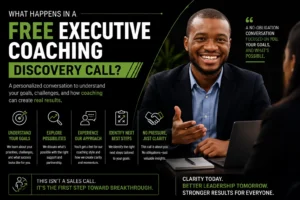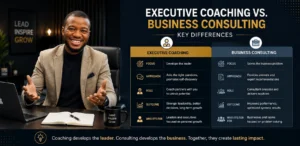

A free executive coaching discovery call is a short, no-obligation conversation with a coach, usually 20 to 45 minutes. You talk through your goals, and both of you figure out if working together makes sense. It’s not a sales pitch wearing a friendlier outfit, and it’s not a full coaching session either. It sits somewhere in between. The coach learns what’s actually going on in your leadership life, you get a feel for how they work, and by the end, you both know whether to move forward. Here’s what actually happens on that call, and how to get the most out of it.
For the bigger picture on how coaching works beyond this first call, check out our pillar guide on Executive Coaching: What It Is, How It Works, and Who It’s For.
What to Prepare Before the Call

You don’t need a polished pitch or a slide deck. A little forethought just makes the 30 minutes go further.
- Jot down one or two specific situations you’d like to improve: a hard conversation you keep putting off, a team that’s underperforming, or a promotion you’re not totally sure you’re ready for.
- Have a rough sense of your timeline. Are you dealing with something urgent, or planning ahead for a role change months out?
- Know your budget range, even loosely. Coaches structure engagements differently, so it helps to walk in knowing what you’re comfortable spending.
- Bring your own questions. This call goes both ways it’s not an intake form you’re filling out.
What the Coach Actually Asks You
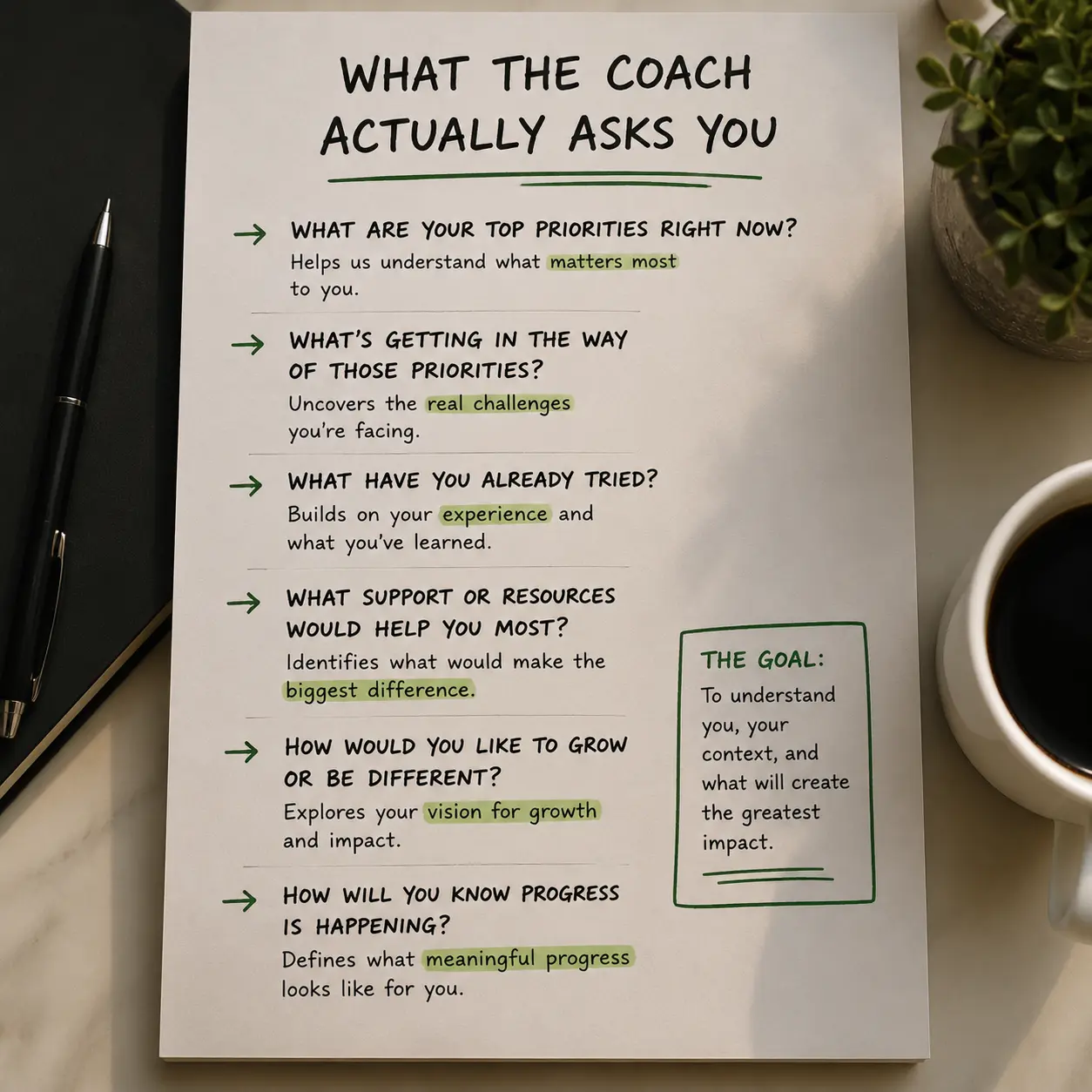
Most experienced coaches follow a loose but fairly consistent arc. Current situation first, then what success would actually look like, then logistics.
Expect questions about your role and the pressure you’re currently under. A good coach also pushes past the vague stuff. “I want to be a better leader” isn’t specific enough to work with, so they’ll dig for the real friction point, delegation, visibility, conflict, or burnout. They’ll usually ask what you’ve already tried. That’s mostly so they’re not repeating advice you’ve already heard and dismissed. And they’ll ask what outcome you actually want, which often means turning something fuzzy like “more confidence” into something concrete, like walking into a board meeting without three days of over-preparation beforehand.
One thing that surprises a lot of people: coaches also ask about your availability and how consistently you can show up. Coaching only works if you’re actually present for it. A good coach raises this early, instead of after you’ve already signed something.
What the Coach Is Quietly Evaluating
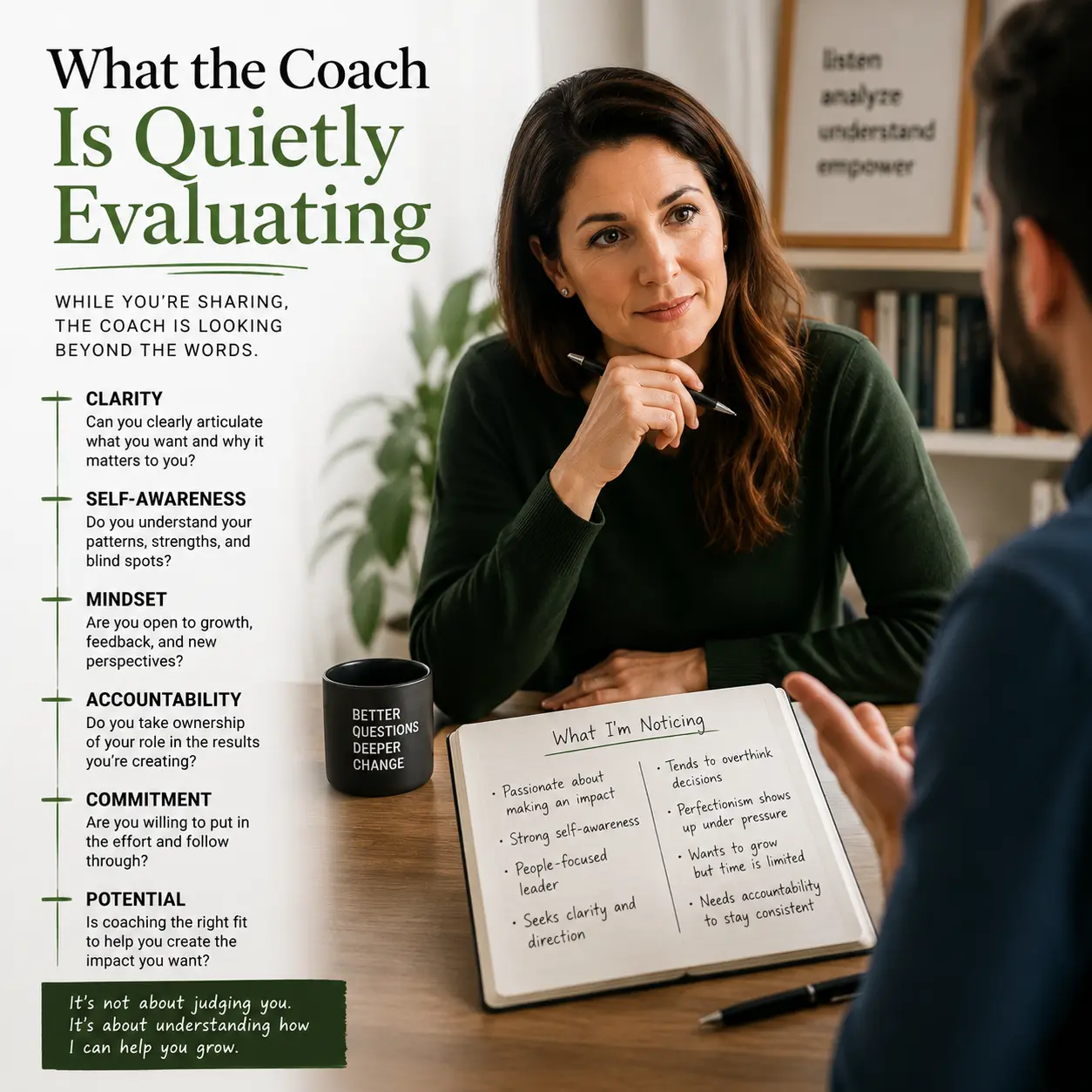
The call runs in both directions. While you’re deciding if this coach is right for you, they’re assessing fit too even if they never say so out loud.
This isn’t just etiquette. A peer-reviewed study published in PLOS ONE tested what happens when a coach’s approach actually matches a client’s natural style, versus when it doesn’t. Clients in the “fit” group reported meaningfully better goal attainment and coaching progress. The match itself changes outcomes. It’s not just a nice-to-have for rapport. That’s exactly why a real discovery call spends time on compatibility rather than rushing straight into a sales close.
Behind the scenes, a coach is generally weighing a few things. Whether your goals actually fall inside their scope of practice executive coaching isn’t therapy, and a responsible coach will say so if your situation calls for something else. Whether you seem genuinely coachable and open to feedback. And whether your timeline realistically lines up with their availability. The ICF’s core competency framework treats this compatibility check as a formal part of setting up the coaching agreement, not an afterthought tacked on at the end.
Questions Worth Asking the Coach
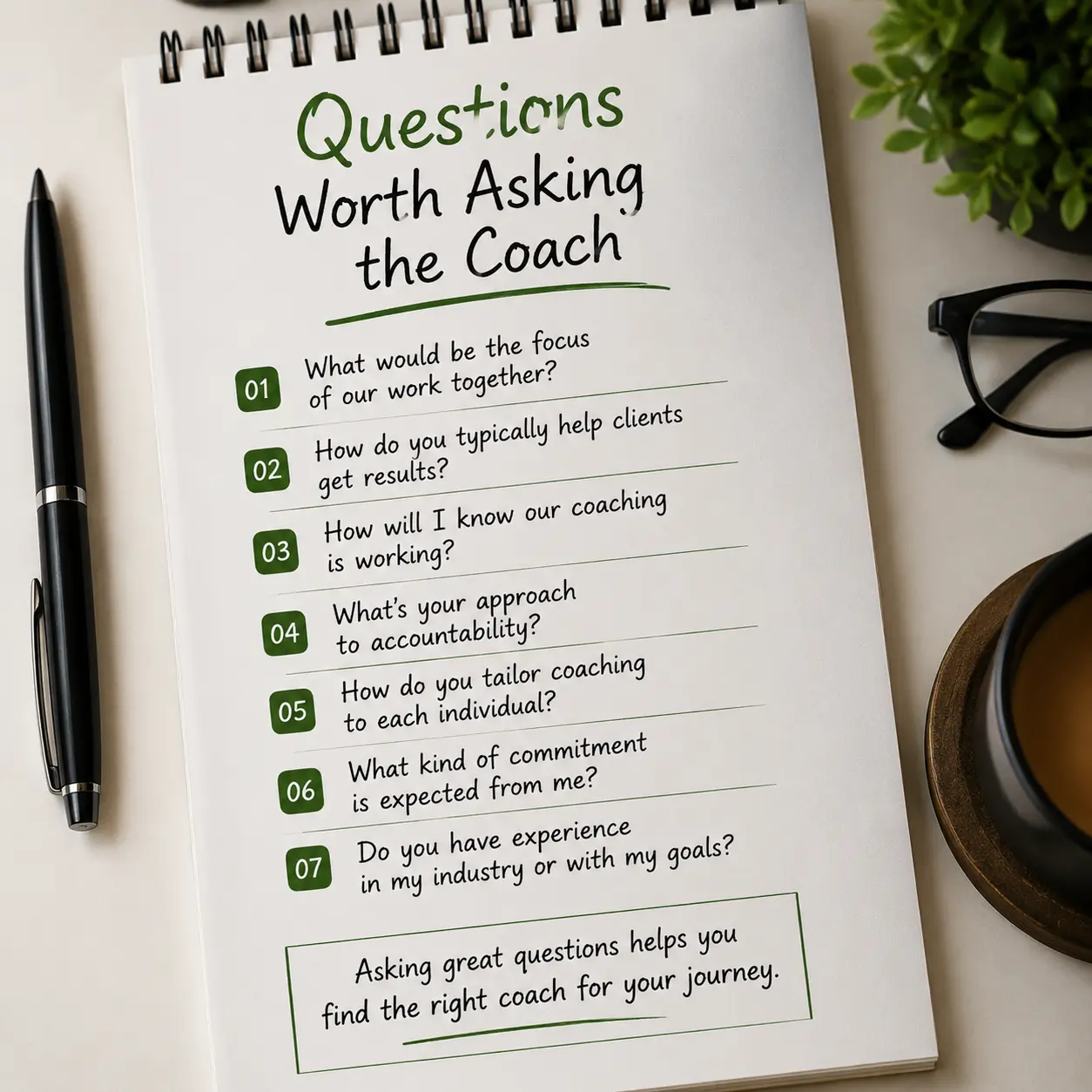
This call is your chance to interview them too, so don’t hold back.
- What’s your coaching process, and how do sessions typically run?
- What credentials or training do you hold are you certified through a recognized body like the ICF?
- Have you worked with leaders in a similar role or industry before?
- How do you measure progress over the course of an engagement?
- What does a typical engagement length and cadence look like?
- What happens if the fit turns out to be wrong after we’ve already started?
If a coach gets cagey or defensive about any of these, take note. That tells you something.
How Long Does a Discovery Call Actually Take?
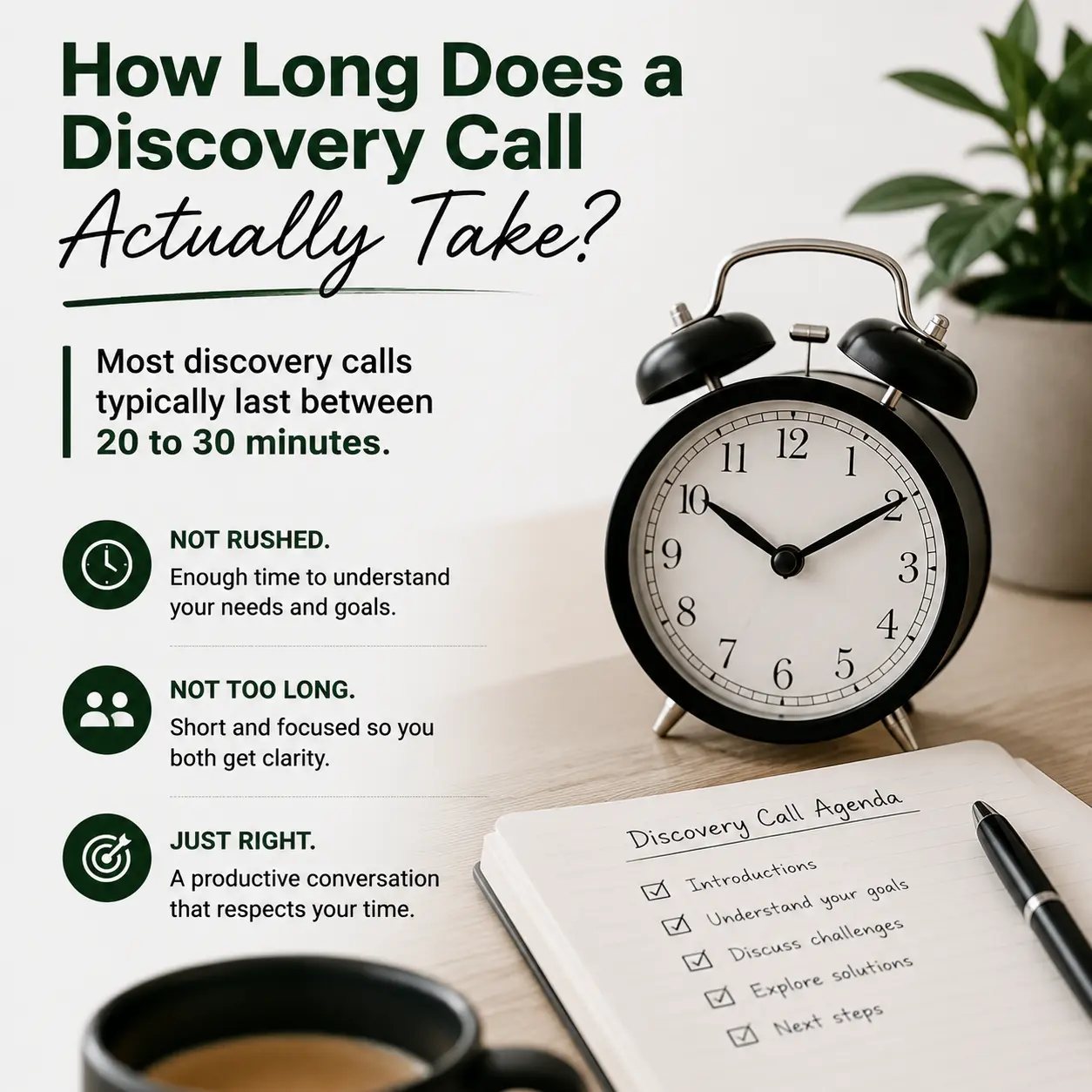
Most run 20 to 45 minutes. Shorter calls tend to stick closely to logistics and fit. Longer ones sometimes include a small taste of the actual coaching process one or two genuinely thought-provoking questions that let you feel how the coach thinks, not just hear them describe it. Both formats are perfectly normal. What matters more than the minute count is whether you walk away with real clarity, not just a pleasant chat that went nowhere.
What Happens After the Call
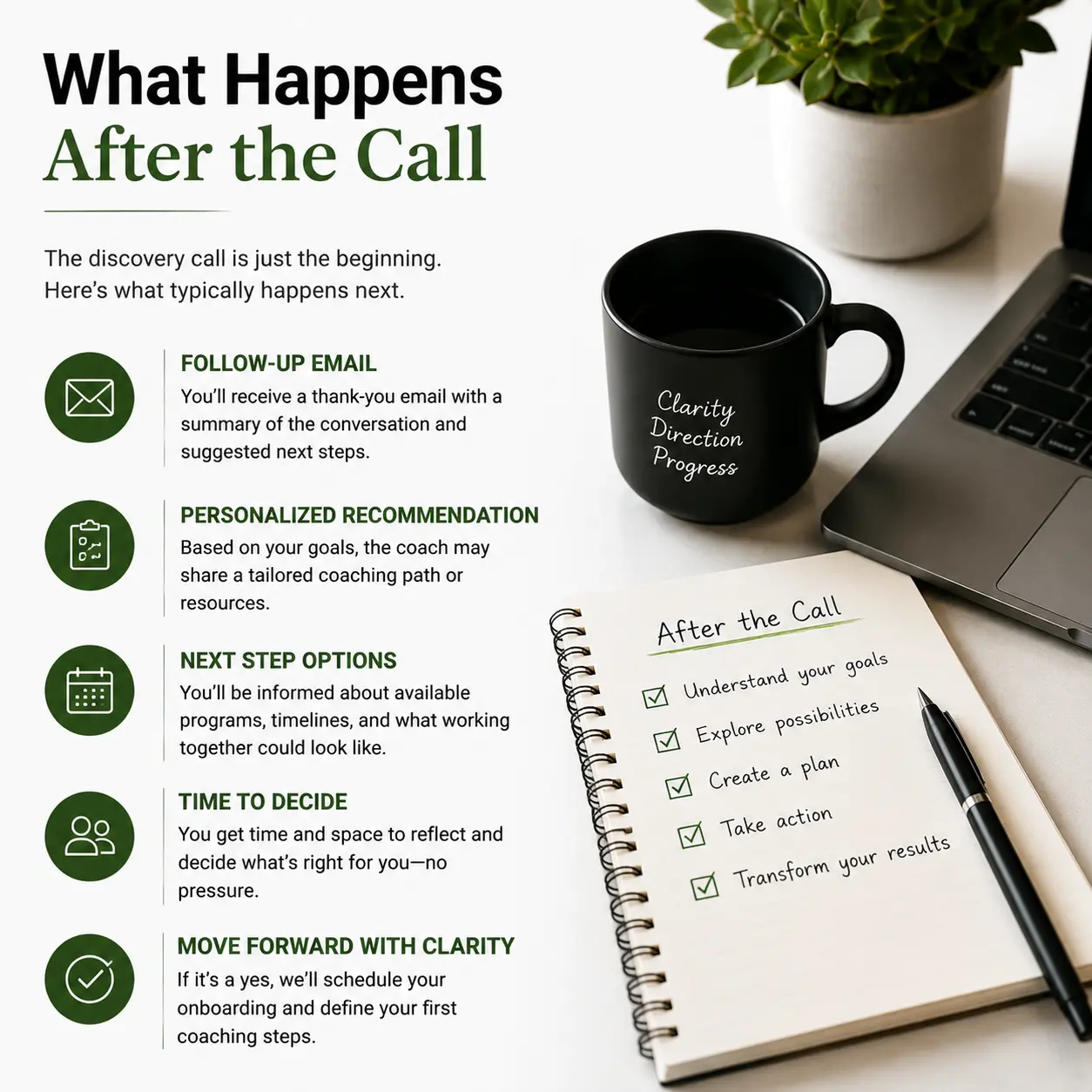
A good discovery call ends with a clear next step, not vague enthusiasm that fizzles out by the next morning.
If it’s a fit, the coach usually follows up with a proposal covering session frequency, engagement length, and pricing. Nobody should expect you to sign anything on the spot. If it’s not a fit, a responsible coach says so directly. Sometimes they’ll even point you toward someone better suited to your situation. And if you just need time to think, a good coach respects that fully and won’t chase you for an answer.
Take whatever time you need here. Executive coaching engagements often run for several months or longer, so getting the fit right at the start saves everyone time down the line.
Is a Discovery Call Really “Free”?
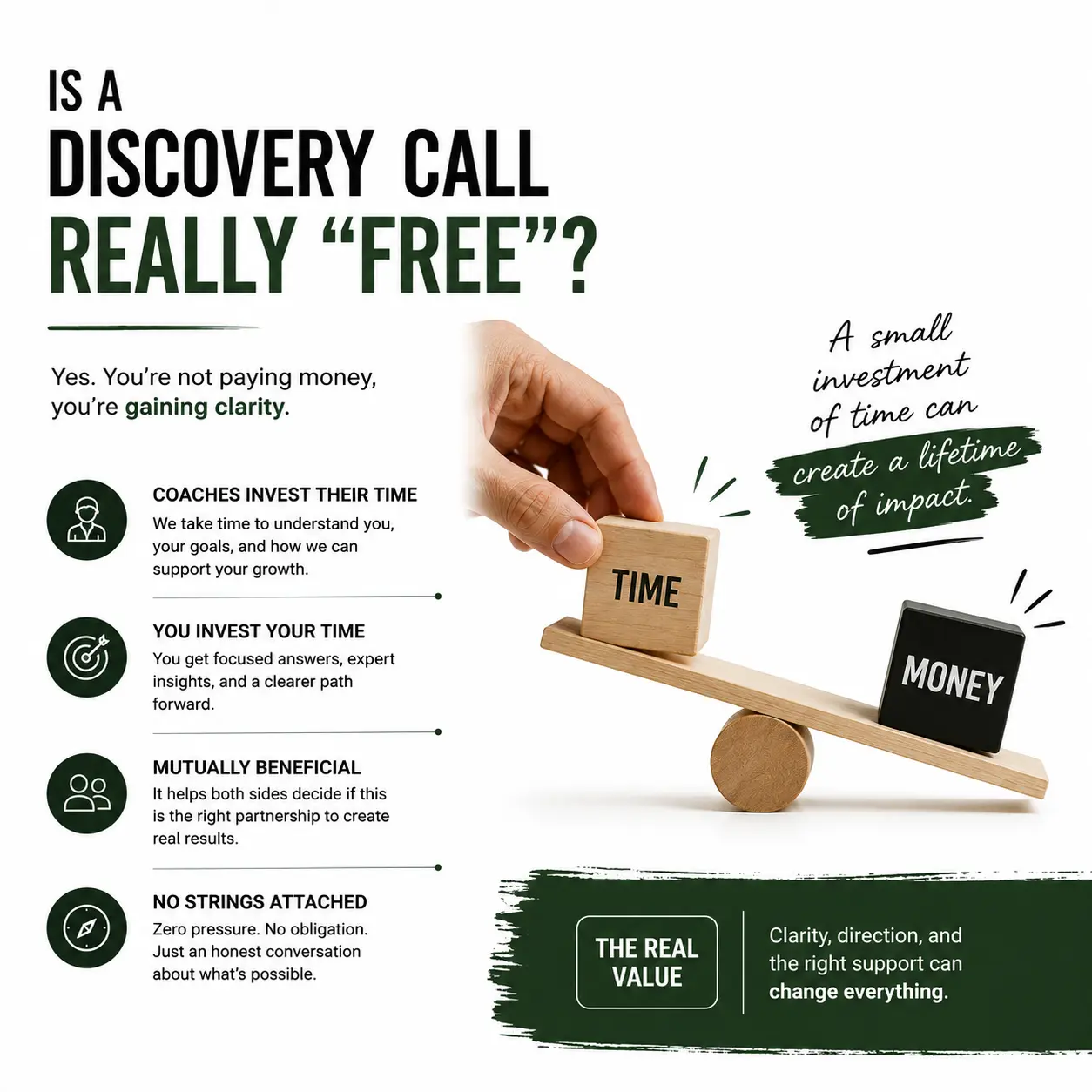
Yes, no payment changes hands, and there’s no obligation to continue. But it’s not “free” in the sense of being throwaway time on either side. Coaches treat it as a genuine diagnostic conversation. A rushed or superficial call tends to produce poor-fit engagements that don’t work out for anyone. That care up front is part of why coaching, done properly, actually delivers returns. Independent research from ICF and PwC found that 87% of surveyed leaders and organizations reported a high ROI from executive coaching. That kind of number is hard to reach without the right fit established from that very first conversation.
Green Flags and Red Flags to Watch For
A few signs the call is going well: the coach asks more questions than they answer in the first ten minutes. They’re upfront about their process and credentials without you having to pry. And they’ll tell you plainly if they’re not the right fit, instead of pushing you toward a sale anyway.
Watch out for the opposite: heavy pressure to commit before you’ve even left the call. Vague or dodgy answers about training and methodology. A conversation that feels more like a rehearsed pitch than an actual discussion about you and your situation.
The Bottom Line
A free executive coaching discovery call exists to answer one honest question. Is this the right coach, at the right time, for what you’re actually trying to solve? Walk in with a real challenge in mind. Ask direct questions. Notice how the conversation actually feels, not just how polished it sounds. When both sides are being straightforward, the right fit usually becomes obvious fast.
If you’re ready to see what that conversation looks like in practice, explore our leadership coaching services and book a discovery call to find out if we’re the right fit for your goals.