
Executive coaching is a development process involving one-on-one coaching between a professional coach and a senior leader to support improved decision-making, communication, and self-awareness. Usually, they are held every two to four weeks over a period of 3 to 12 months and are based on genuine difficulties the individual leader is encountering at work, not general theory.
That’s the short answer. Here’s what it actually looks like in practice, who it’s for, and why so many companies now treat it as a normal part of leadership development instead of a last resort. For a deeper breakdown of the full process, see our complete guide: Executive Coaching: What It Is, How It Works, and Who It’s For.
Understanding Executive Coaching in Practice

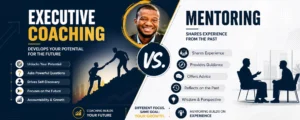
Executive coaching is not therapy, and it’s not mentoring. A therapist helps you process the past. A mentor shares their own experience and tells you what worked for them. A coach does neither. Instead, a coach asks questions, holds up a mirror, and helps you find your own answers to problems you’re already facing as a leader.
Most engagements are built around a few consistent elements:
- A private, confidential space to think out loud
- Regular one-on-one sessions with the same coach
- Clear goals set at the start (often tied to a specific business outcome)
- Feedback tools like 360-degree reviews or stakeholder interviews
- Accountability between sessions
The International Coaching Federation (ICF) describes coaching as a partnership built on questioning and discovery, not casual advice-giving. That distinction matters, because it’s what separates coaching from a friendly chat with a senior colleague.
When Leaders Turn to Executive Coaching
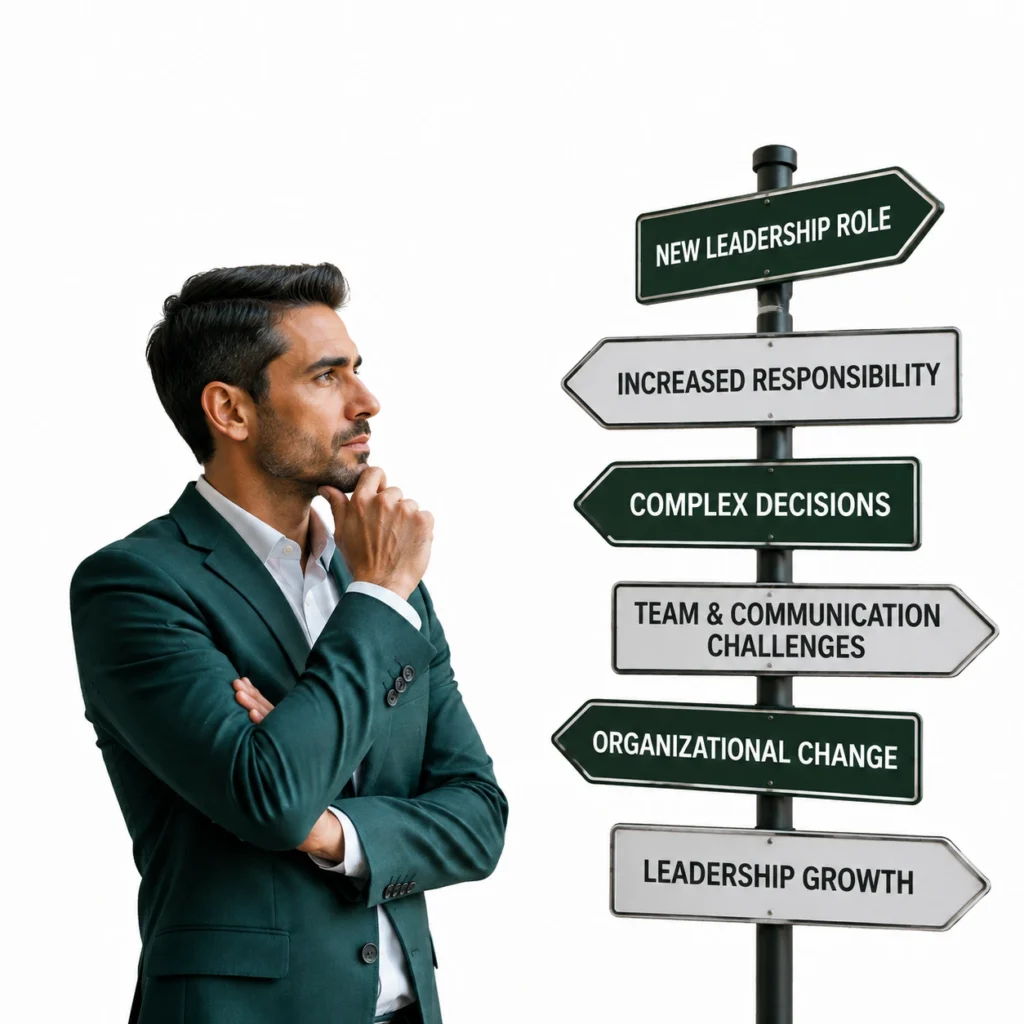
The name suggests it’s only for CEOs, but that’s outdated. The 2025 ICF Global Coaching Study found that over half of surveyed coaches identify leadership or executive coaching as their primary specialty, and the client base has widened well beyond the C-suite.
People who typically seek out executive coaching include:
- Senior leaders and directors preparing for a bigger role
- First-time executives who were promoted for technical skill, not people skills
- Founders scaling past the point where instinct alone works
- High performers who keep hitting the same interpersonal wall
- Leaders going through a merger, restructuring, or major transition
If someone has real influence over people or decisions and wants to lead with more clarity, they’re a fit for executive coaching, regardless of title.
The Executive Coaching Process Explained
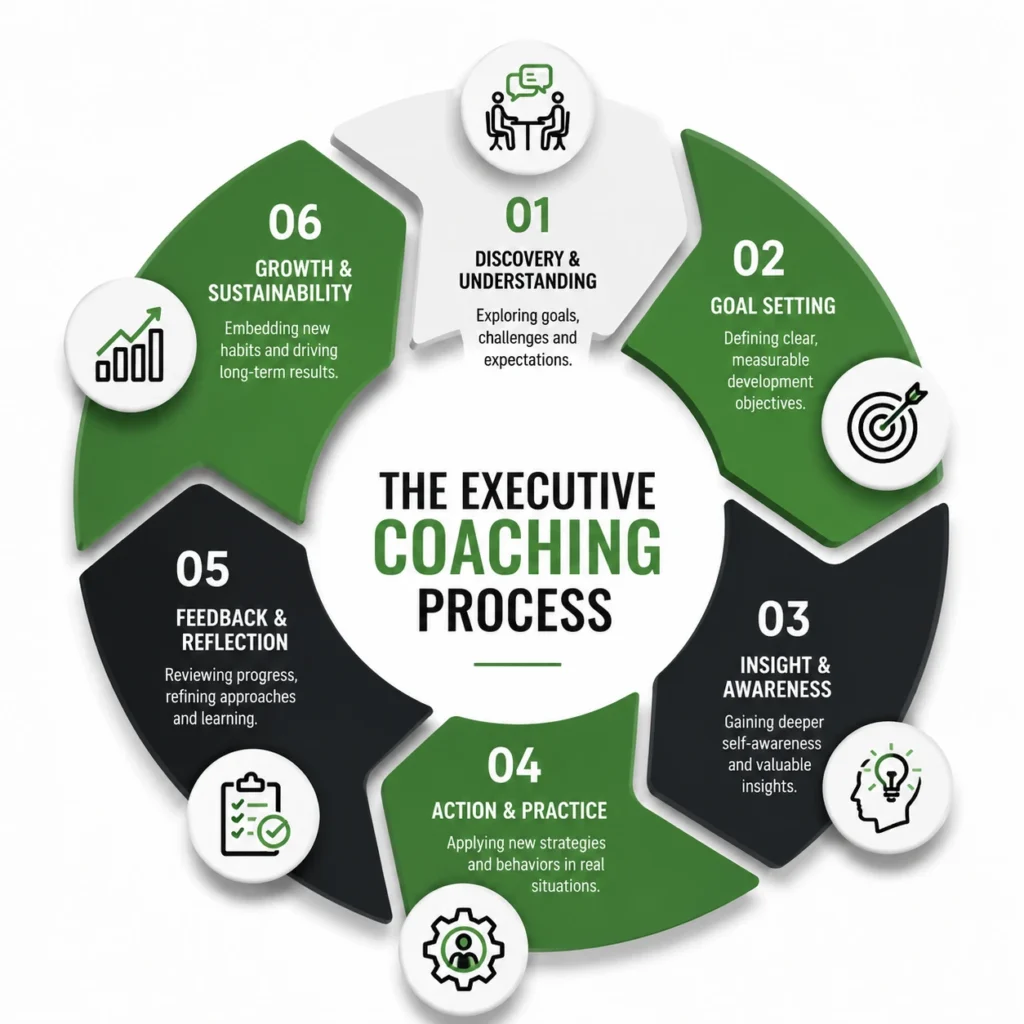
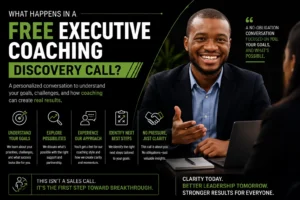
1. Discovery call. Most coaching relationships start with a short, no-cost conversation. The goal is to check fit does this coach understand the leader’s world, and does the leader feel comfortable being direct with them.
2. Goal setting. The coach and client agree on two or three specific outcomes. “Get better at leadership” is too vague. “Reduce conflict with my VP of Sales” or “run meetings that end with decisions, not just discussion” is something you can actually measure.
3. Assessment. Many coaches use a personality or behavioral assessment, plus feedback from peers, direct reports, or a manager. This gives the coach and the client a clearer starting point than self-perception alone.
4. Regular sessions. Sessions typically run 45 to 60 minutes, every two to four weeks, for three to twelve months. Between sessions, the client applies what came up in real situations at work.
5. Review and adjust. Good coaching engagements check progress against the original goals every few months, not just at the end.
There’s no fixed script. A session might focus on preparing for a hard conversation with a board member, reworking how someone delegates, or simply slowing down enough to notice a pattern that keeps causing problems.
What Leaders Can Expect From Executive Coaching Outcomes
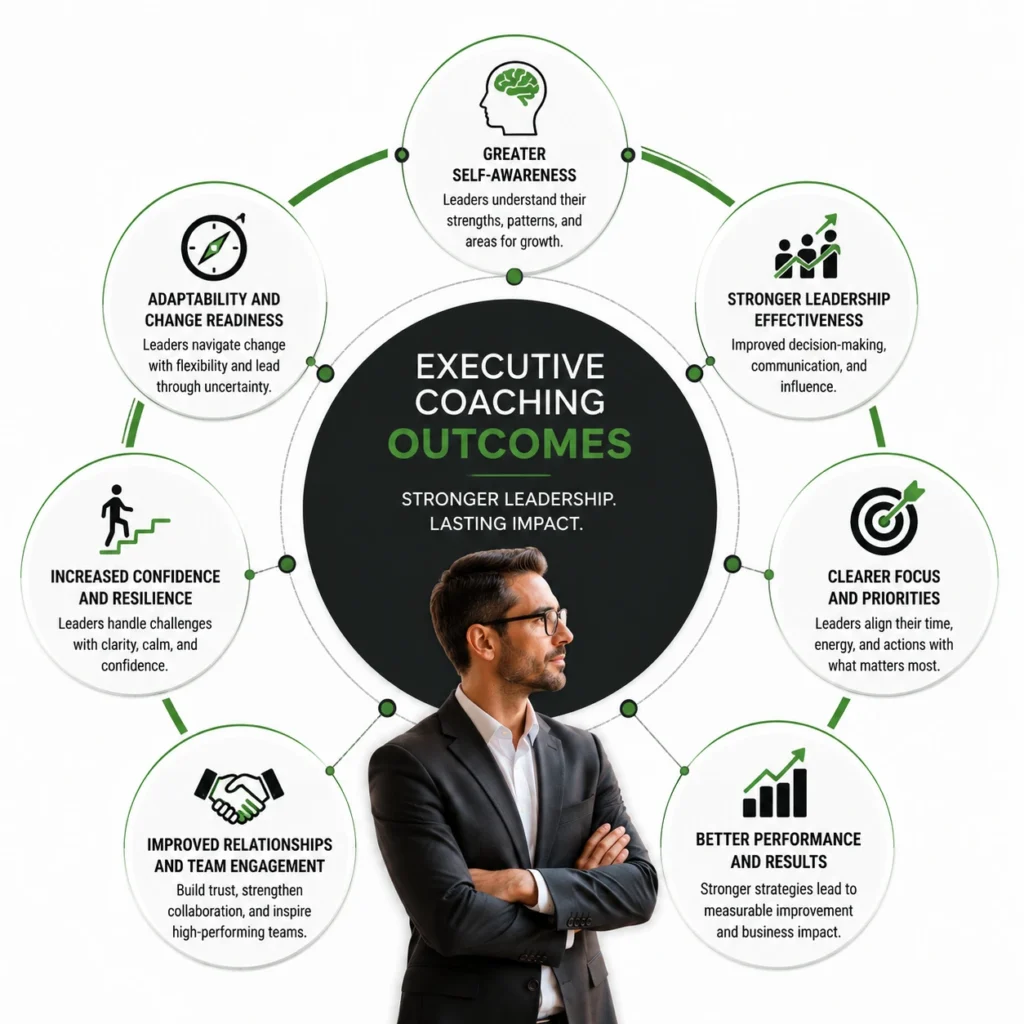
The short answer, backed by data, is yes more often than not.
- The ICF/PwC Global Coaching Client Study found that most organizations tracking coaching ROI report a return of 5 to 7 times their investment, and a meaningful share report returns far higher than that.
- Around 86% of companies that measured coaching ROI said they at least recovered their initial spend, based on the same ICF/PwC research.
- A large share of coached executives report stronger self-confidence and better working relationships after coaching, based on the same ICF/PwC research.
- The global market for executive coaching and leadership development was valued above $100 billion in 2025 and is projected to keep growing through 2030, according to Mordor Intelligence.
This doesn’t mean coaching fixes everything by itself. The results are very much dependent on whether the leader actually implements what emerges in the sessions, and whether the organization supports the behavioral change instead of silently rewarding the old behaviors.
How Executive Coaching Differs From Other Leadership Development Approaches
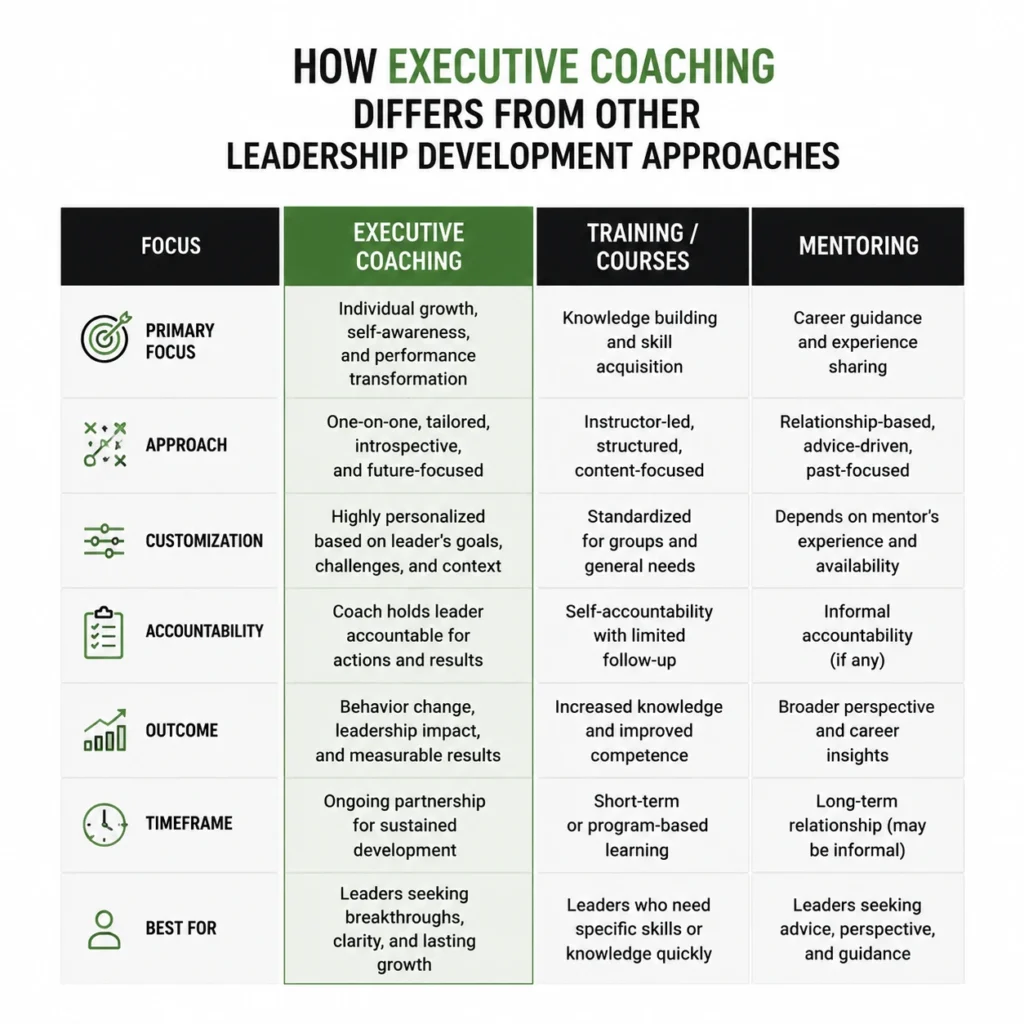
These three get mixed up constantly:
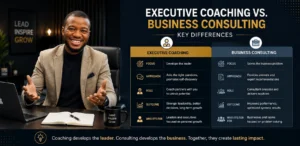
- Executive coaching focuses on a specific senior leader’s performance, decisions, and blind spots, usually tied to business results.
- Leadership coaching is broader and often works with managers at any level, not just senior executives, focused on building leadership skills over time.
- Mentoring involves someone more experienced sharing their own path and advice, rather than drawing out the client’s own thinking.
They can overlap, but a good executive coach won’t just tell a client what to do; they’ll help the client work out the right move themselves.
The Timeline for Progress Through Executive Coaching
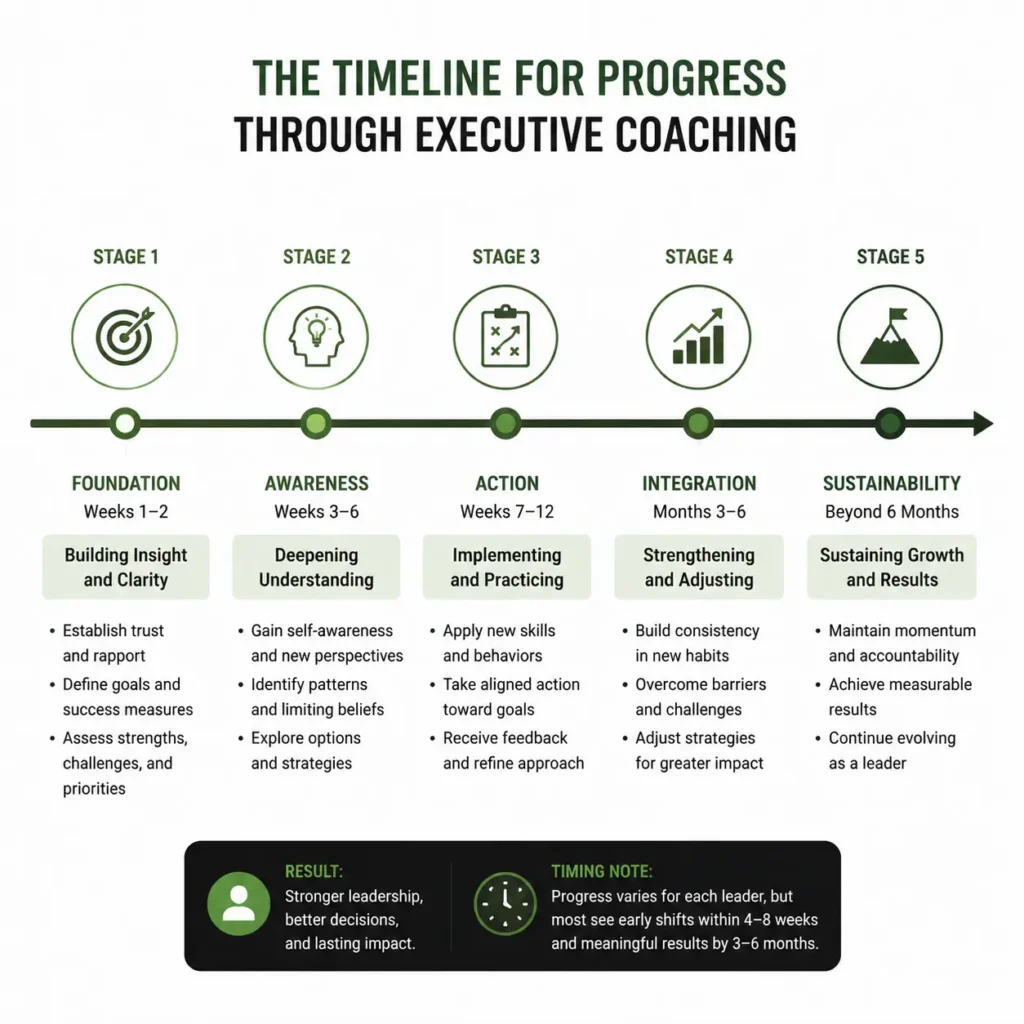
Most people notice a shift in how they think about a problem within the first few sessions. Measurable behaviour change, better meetings, calmer conflict handling, and clearer delegation usually take three to six months of consistent work. Deeper shifts in confidence and decision-making tend to show up closer to the nine-to-twelve-month mark.
Ready to Work With an Executive Coach?
If you’re a senior leader looking for clarity, stronger decision-making, and a partner who’ll ask the right questions, explore our leadership coaching services or book a free discovery call to see if it’s the right fit.