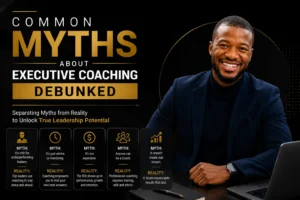

Executive coaching myths stop more leaders from getting help than any budget line item ever does. Ask around a boardroom and you’ll hear the same tired lines. Coaching is for executives who are “broken.” It’s a soft perk for the C-suite. It’s just glorified advice-giving with an expensive price tag. None of that holds up once you look at what modern executive coaching actually does. Below, we tackle the myths that come up most often. We replace each one with what the research and real client outcomes actually show.
Still deciding whether coaching fits your growth plan? Start with our pillar guide, Executive Coaching: What It Is, How It Works, and Who It’s For. It covers the fundamentals. This piece picks up where that one leaves off.
Myth 1: Executive Coaching Is Only for Leaders Who Are Struggling
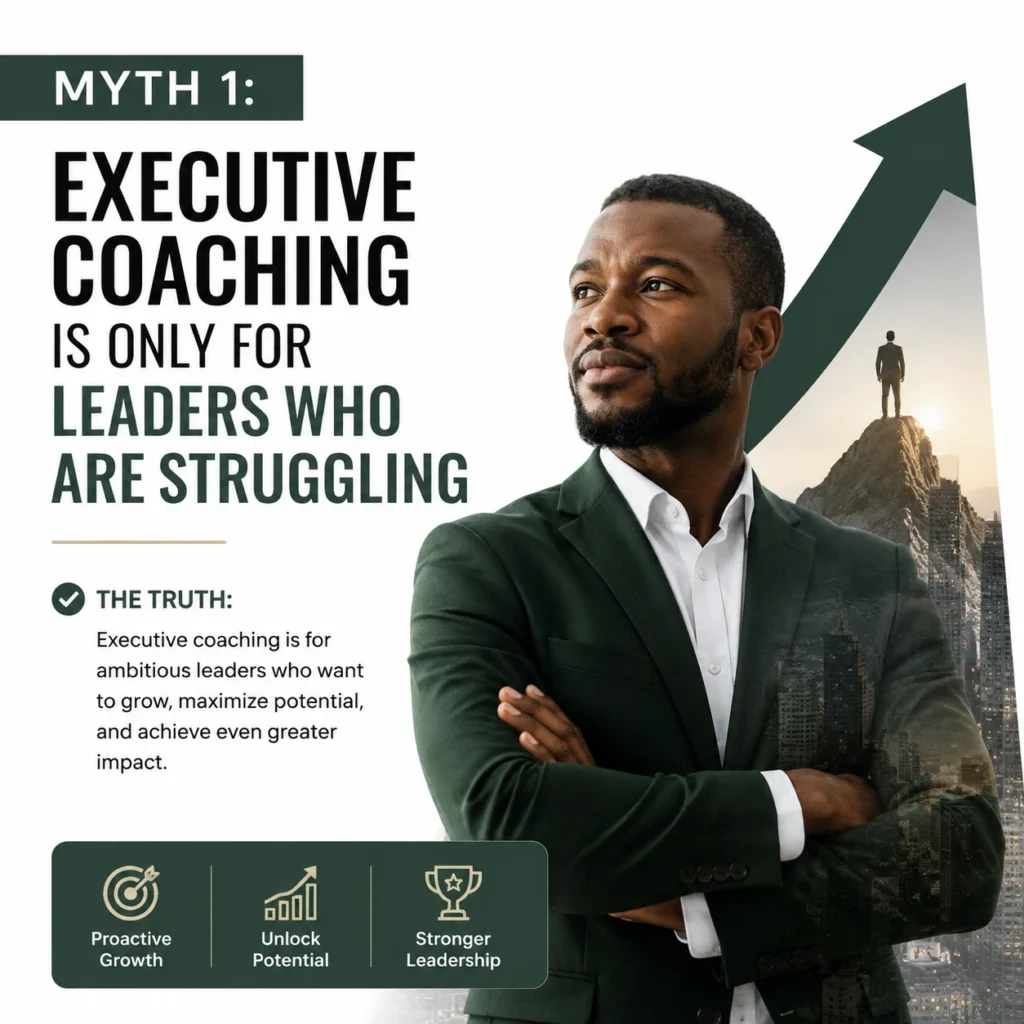
This myth does the most damage. It turns coaching into something to hide rather than something to use. In reality, high performers sign up for coaching more often than struggling leaders do. They want to close the gap between good and exceptional. A coach doesn’t wait for a leader to fail. A coach helps a leader spot blind spots, sharpen decision-making, and build self-awareness that promotions never come with instructions for.
The way organizations actually use coaching backs this up:
- Companies pair coaching with high-potential leadership pipelines and succession planning, not performance improvement plans.
- Many organizations build coaching into first-90-days support for newly promoted executives, well before anything goes wrong.
- A large-scale ICF client study found that 80% of coached leaders reported improved self-confidence. 70% reported improved work performance. Leaders chase these gains when they’re already doing well.
Myth 2: Coaching and Therapy Are the Same Thing
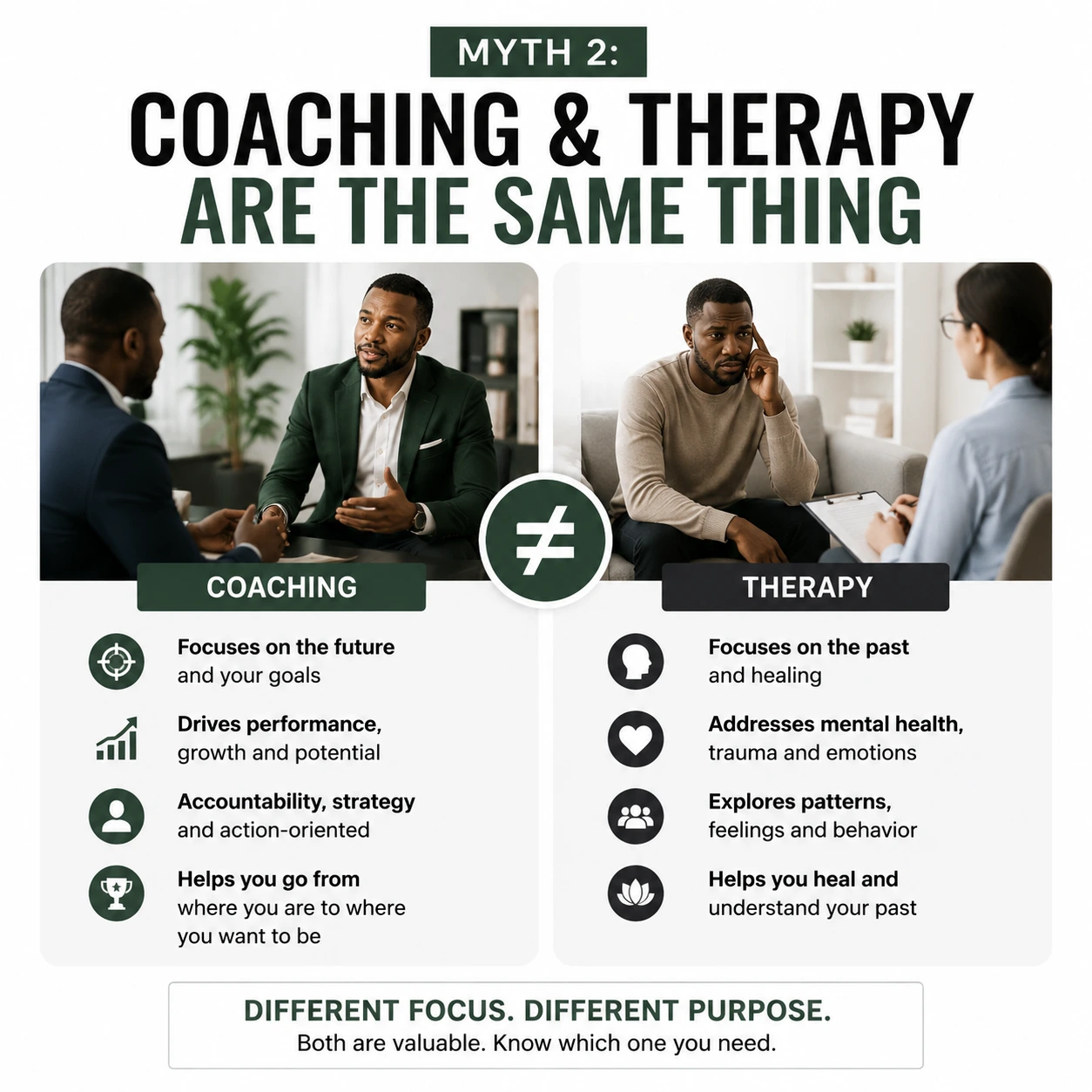
People lump coaching and therapy together constantly, but the two solve different problems. Therapy generally looks backward. It helps you understand and heal emotional or psychological patterns. Executive coaching looks forward. It focuses on goals, behaviors, and business outcomes: sharper communication, stronger delegation, better decision-making under pressure. A coach doesn’t diagnose anything. A coach helps a capable leader turn potential into measurable performance.
This distinction matters if you’re weighing whether coaching fits you. You don’t need a clinical reason to work with an executive coach. You need a goal. Maybe that’s a promotion to grow into, a team to align, or a leadership style to refine. Then you need a structured process to get there.
Myth 3: The Results Are Too Vague to Measure
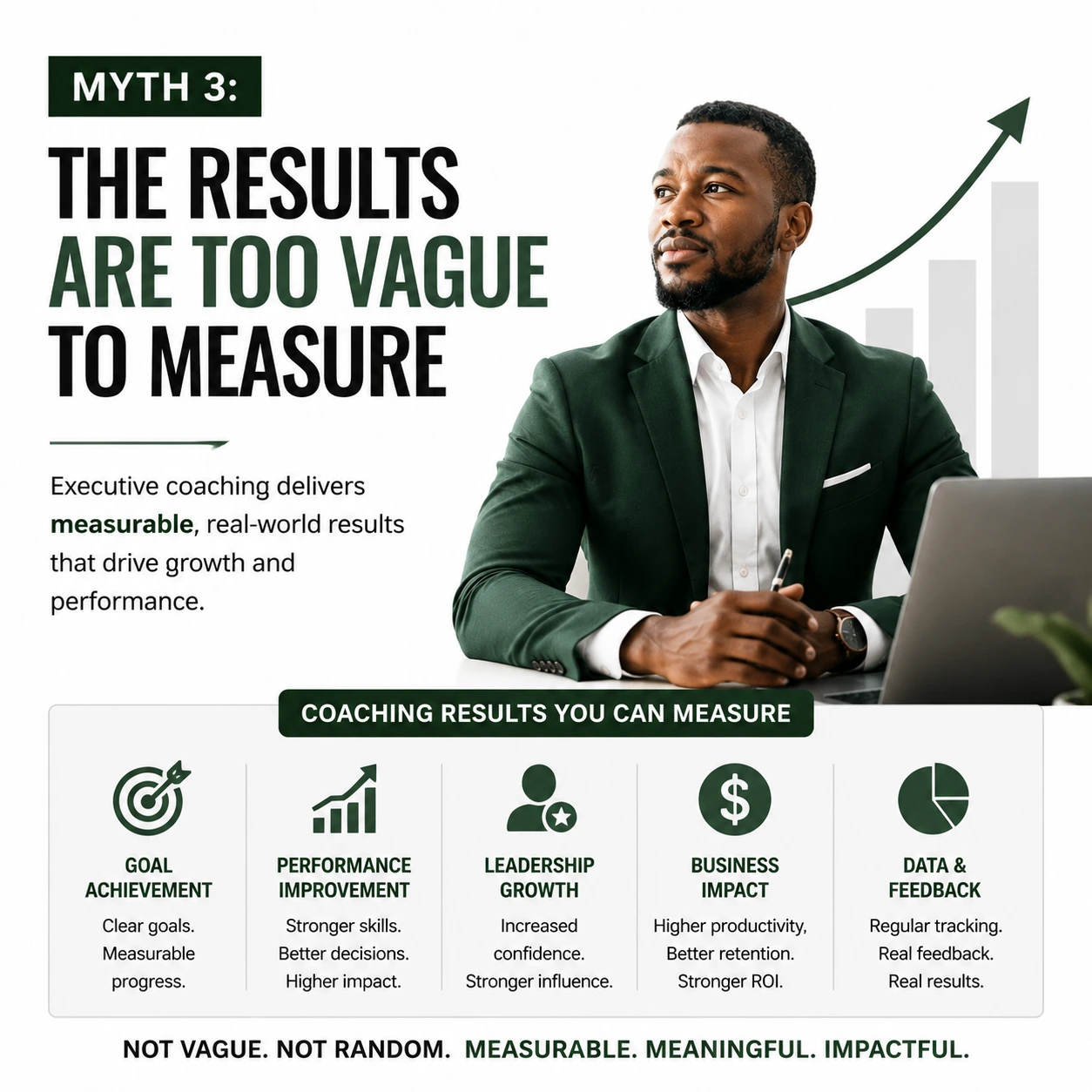
Skeptics assume coaching produces feel-good conversations with no bottom-line impact. The data says otherwise. A widely cited global study by ICF and PwC found that 87% of survey respondents saw a high return from executive coaching. The same research found a strong link between coaching and stronger employee engagement. Independent research puts typical coaching ROI at three to seven times the initial investment. Some enterprise programs report even higher multiples once you factor in retention and productivity gains.
Treat the highest-end figures with some healthy skepticism. The oft-quoted 500%+ case studies usually come from a single company, not a broad population. But look at the pattern across many independent surveys instead of one flashy number. Organizations that track coaching outcomes overwhelmingly report positive, measurable returns. “Vague” doesn’t describe a discipline that HR and finance teams now hold to the same accountability standards as any other leadership investment.
Myth 4: Only Struggling Companies or Failing Leaders Hire Coaches
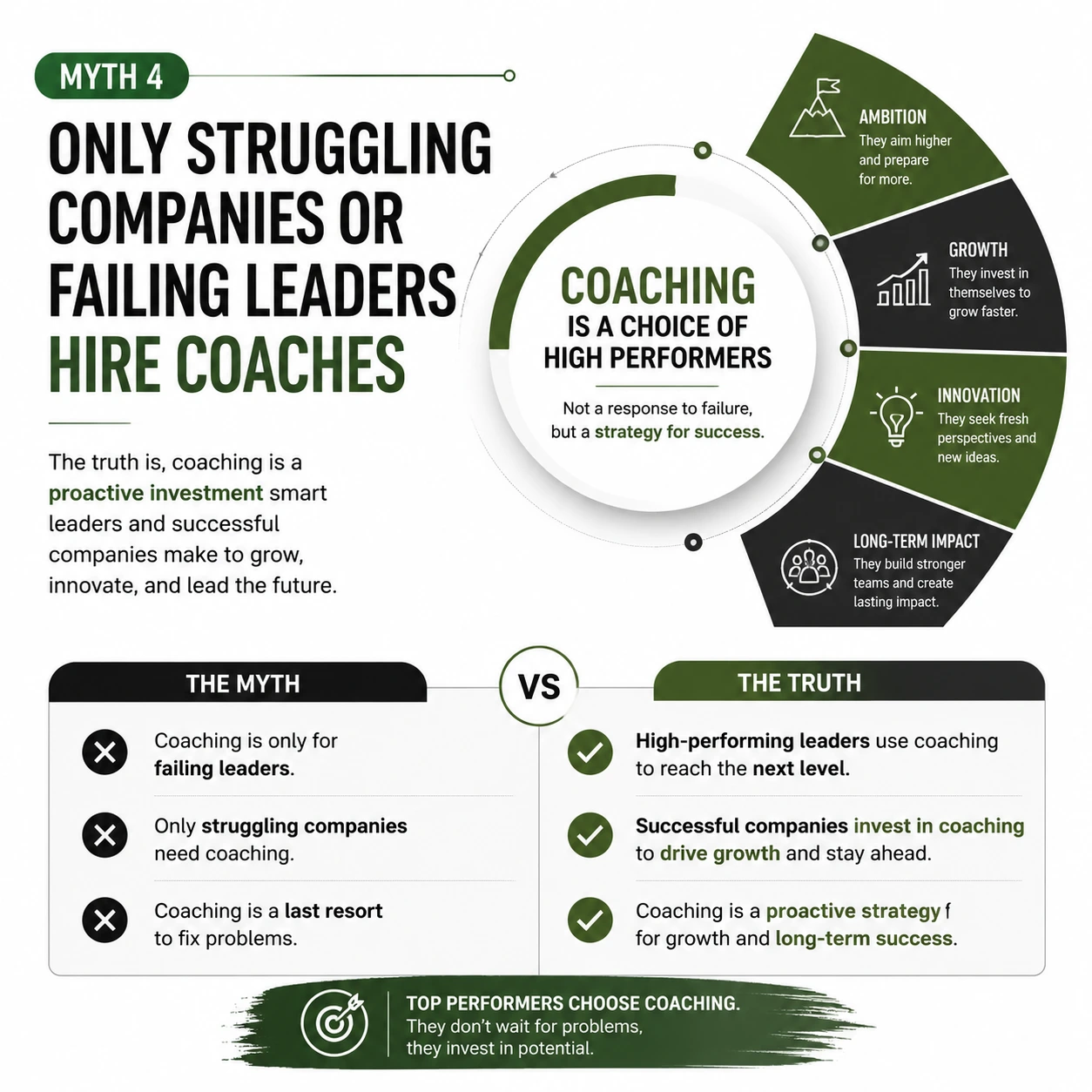
This myth confuses coaching with crisis management. The data shows the opposite pattern. Coaching tends to cluster around organizations that already perform well and want to stay that way, not ones putting out fires.
- Vautier Communications found that 51% of companies with a strong coaching culture report higher revenue than their industry peer group.
- Separate workplace research links coached employees to roughly 25% higher retention rates than non-coached peers.
- Leadership development research shows that many executive transitions derail within the first 18 months without adequate support. That’s exactly the window where proactive coaching helps most.
Coaching works less like a fire extinguisher and more like preventive maintenance for leadership capability.
Myth 5: A Coach Just Tells You What to Do
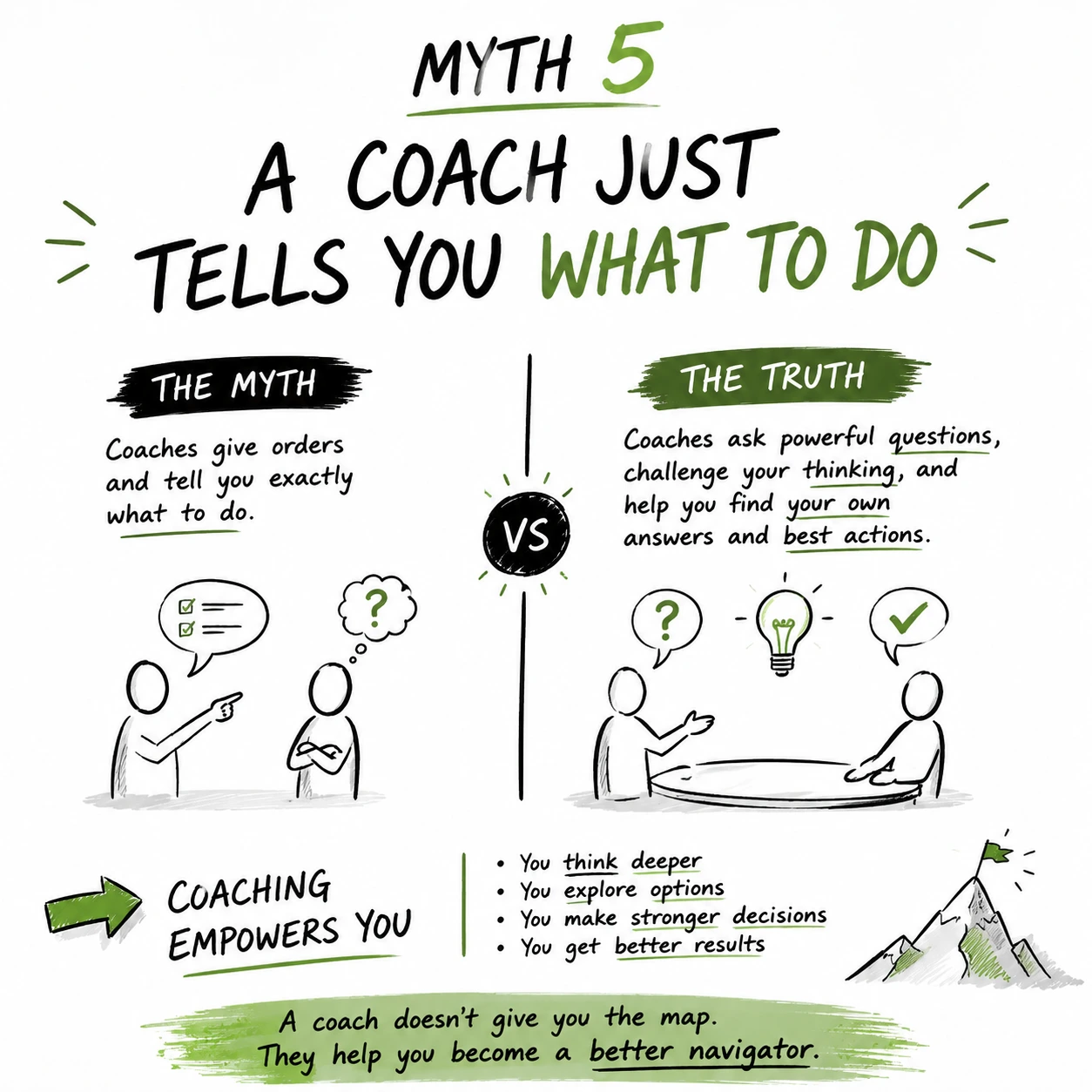
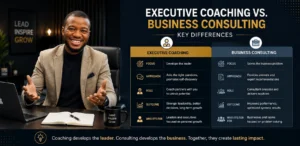
A good executive coach rarely hands out prescriptive advice. Instead, the coach asks better questions, challenges assumptions, and creates space for a leader to reach their own, better-informed decisions. That’s a meaningful difference from consulting, where an outside expert diagnoses a problem and recommends a fix. Coaching builds the leader’s own judgment. The improvement outlasts the engagement instead of creating dependency on the coach.
This question-led approach is also why it sticks. The same ICF research cited above found that 61% of coaching clients improved their actual business management skills, not just their confidence in the moment. That points to learning that transfers well beyond the session.
Myth 6: Executive Coaching Is Too Expensive to Justify
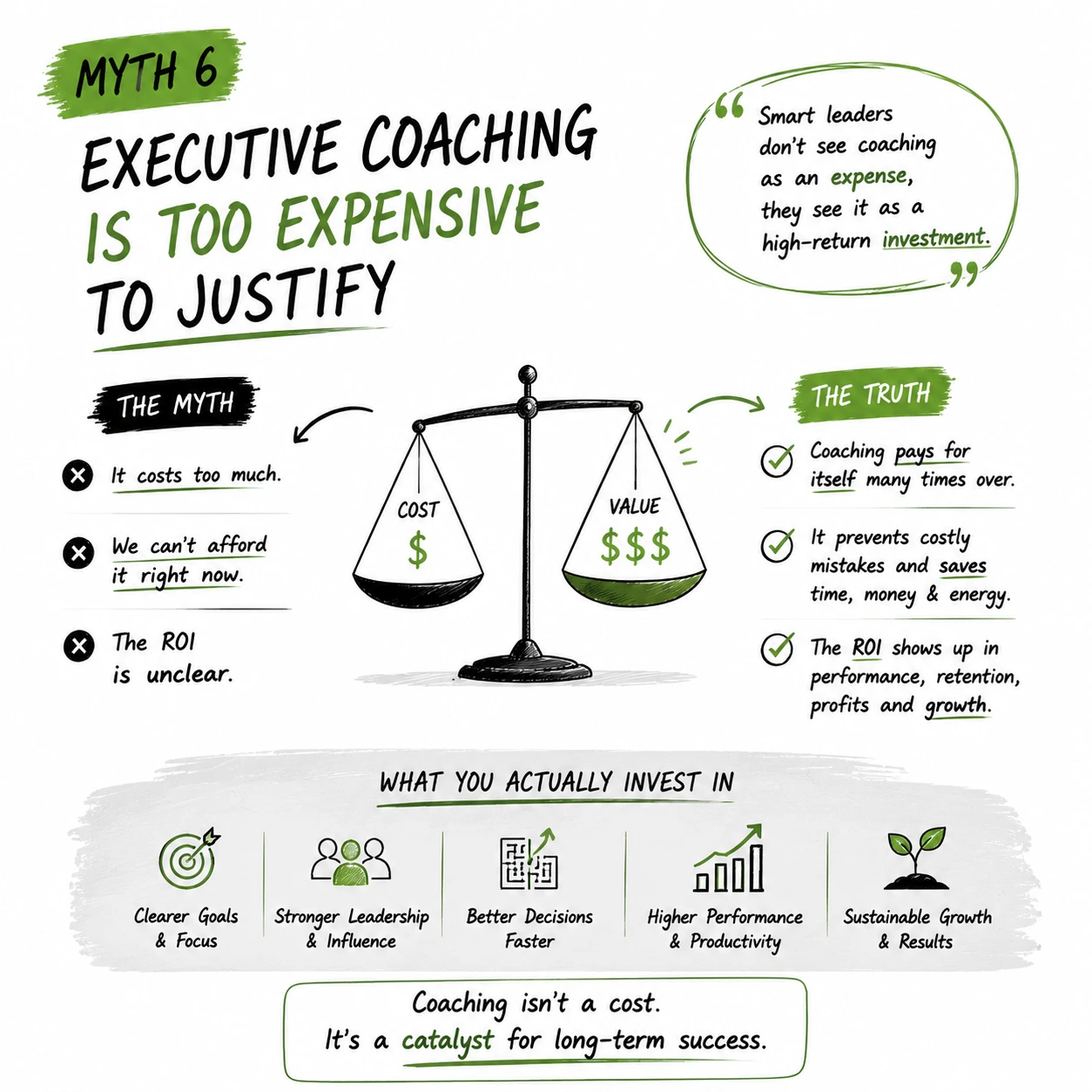
Cost is a legitimate concern, but “too expensive” usually reflects an incomplete comparison. Most leaders weigh the price of coaching against doing nothing. They should weigh it against what coaching prevents instead. Think of a failed executive transition, the resignation of a high-value team member, or a strategic misstep from a blind spot nobody flagged. Workplace research repeatedly ties strong coaching relationships to measurably higher retention among coached employees. Retention alone, avoiding the cost of replacing a senior leader, often justifies the investment before you count any other benefit.
Coaching also doesn’t carry one fixed price tag. Engagements range from short, focused sprints around a specific transition to longer-term partnerships that support a leader through a full role change. That flexibility lets organizations at very different budget levels build coaching into their leadership development plans, rather than treating it as an all-or-nothing luxury.
Myth 7: One Coaching Style Fits Every Leader
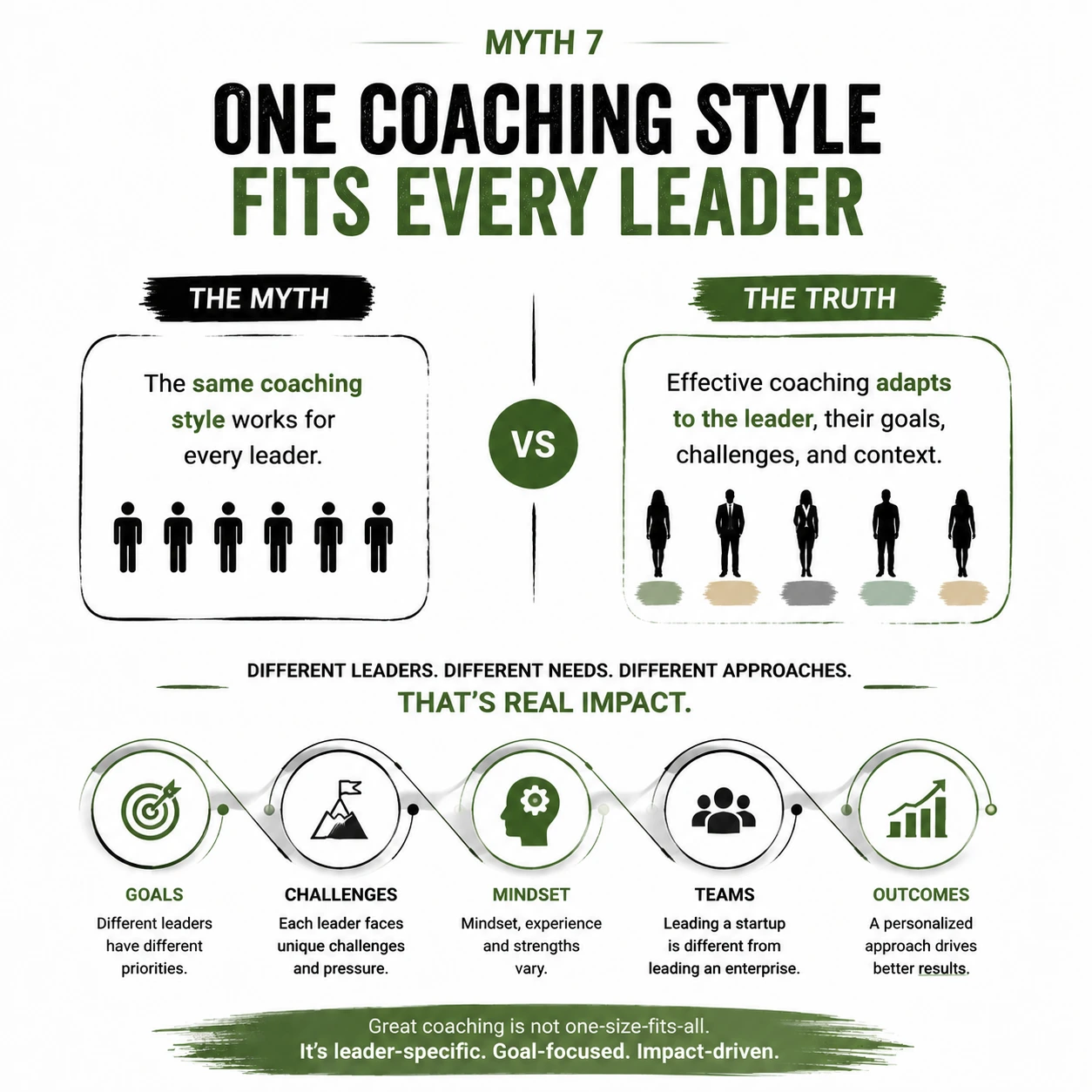
Executive coaching isn’t a standardized product. A leader navigating a first-time VP role needs something different from a founder scaling past 100 employees. Both need something different from a leader working through a team restructuring. Effective coaching engagements center on the individual’s goals, industry context, and leadership stage, not a fixed curriculum applied to everyone who walks through the door.
Fit matters more than most leaders expect. Research summarized by Luisa Zhou found that 75% of leaders rate their coaching’s value as “considerably greater” or “far greater” than what they invested. That gap tracks closely with fit: how well the coach matched the individual leader. If you’re evaluating options, ask any prospective coach how they tailor their approach. Don’t assume every program looks the same.
If you want a coaching relationship built around your specific leadership goals rather than a generic template, check out our leadership coaching services. We design each engagement around exactly that kind of individualized approach.
Myth 8: Coaching Only Benefits the Individual Leader
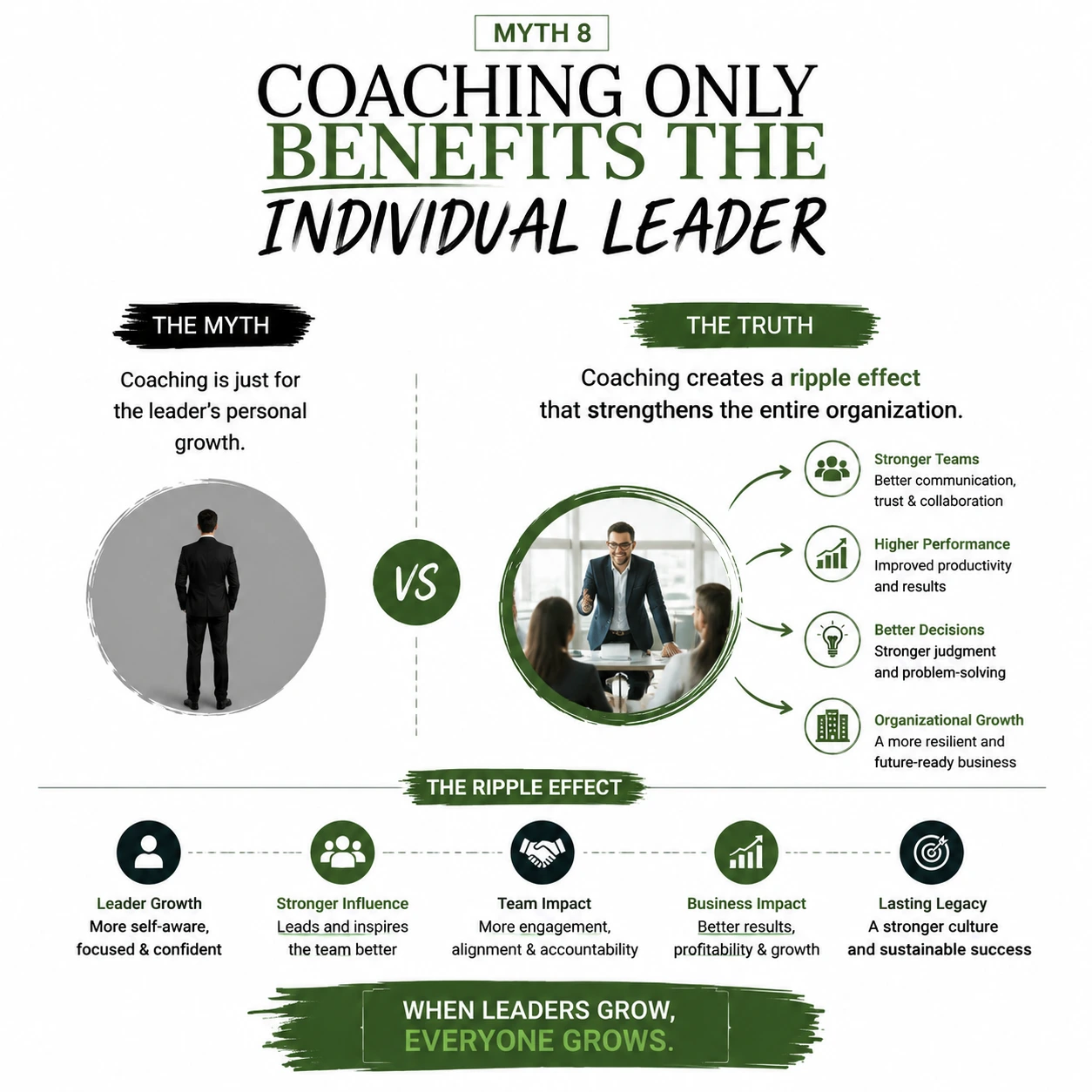
The idea that coaching is a personal perk with no organizational payoff doesn’t match the evidence. When a leader improves how they communicate, delegate, and make decisions, that improvement ripples through every person who reports to them. In the ICF and HCI Defining New Coaching Cultures report, 72% of respondents confirmed a direct relationship between coaching and increased employee engagement. That confirms that coaching one leader changes the wider team’s experience, not just that leader’s personal growth. This compounding effect across a leadership team can reshape an organization’s broader performance, not just one person’s output.
The Bottom Line
Most executive coaching myths survive because coaching used to be quieter about its methods and outcomes than it is today. The evidence available now paints a much more grounded picture. Coaching is a deliberate, structured, evidence-backed leadership investment, not a status symbol or a fallback for failing executives. Leaders who understand that distinction get far more value out of the process, because they walk in looking for growth rather than a rescue plan.
Ready to move past the myths and see what a personalized coaching relationship looks like? Explore our leadership coaching services or start with the fundamentals in Executive Coaching: What It Is, How It Works, and Who It’s For.