
Leaders often reach a crossroads where they know something needs to change, but they aren’t sure who to call. That’s where the debate over executive coaching vs. business consulting usually begins. Both services promise better performance and stronger results, but they work in almost opposite ways. A consultant studies your business and hands you a plan. A coach studies you and helps you build the judgment to create your own plan. Confusing the two can waste a budget, stall a project, or leave a leader without the support they actually needed. This guide breaks down what separates these two disciplines, when each one makes sense, and how to decide which one fits your situation right now.
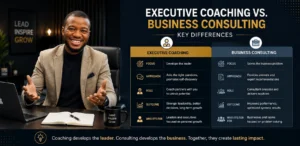
Executive coaching develops a leader’s mindset and behavior through ongoing, personalized dialogue. Business consulting solves a defined organizational problem through outside analysis and a structured action plan. Coaching invests in the person; consulting invests in the plan.
| Executive Coaching | Business Consulting | |
|---|---|---|
| Focus | The individual leader | The organization’s problem |
| Approach | Guided questions, self-discovery | Data analysis, expert recommendations |
| Duration | 6–12 months, ongoing | Weeks to months, project-based |
| Deliverable | Stronger leadership skills | Report, roadmap, or implementation plan |
| Typical cost | $7,500–$25,000 per engagement | Tens of thousands to millions |
| Best for | Behavioral or developmental gaps | Structural or strategic gaps |
What Executive Coaching Actually Does
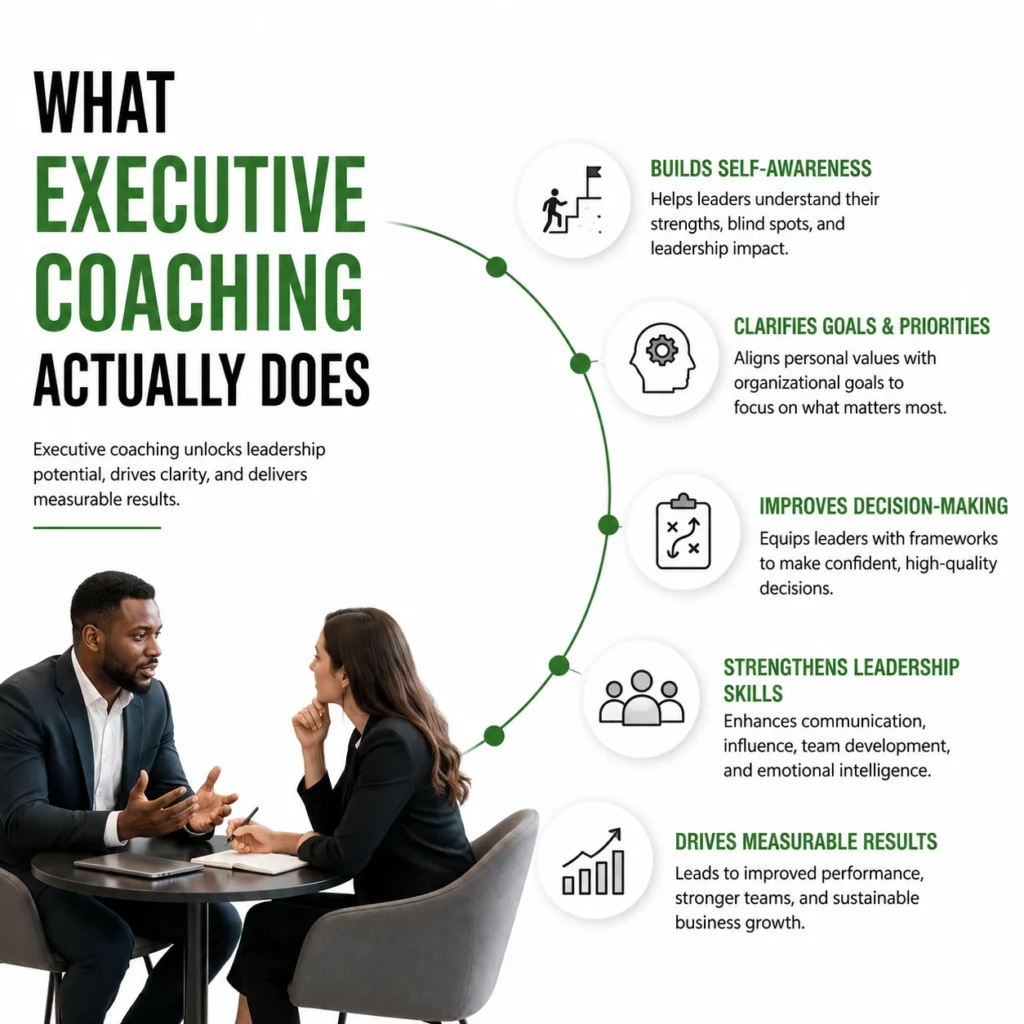
Executive coaching is a one-to-one, customized relationship focused on growing a leader. To understand the fundamentals, process, and outcomes in detail, explore our guide on Executive Coaching: What It Is, How It Works, and Who It’s For.
A coach doesn’t tell a CEO what to decide; they ask questions that sharpen how that CEO thinks, communicates, and leads under pressure. Sessions typically run weekly or biweekly over several months, and the agenda is set by the leader’s goals, not a fixed project plan.
The global executive coaching and leadership development market hit roughly $103.56 billion in 2025 and is projected to reach $161.10 billion by 2030, according to Mordor Intelligence. Average hourly rates in North America run around $297, per the International Coaching Federation’s 2025 Global Coaching Study.
Return on investment is where coaching gets interesting. Research compiled from ICF and PwC studies puts typical coaching ROI between 3x and 7x the initial spend, with 86% of organizations that tracked results reporting a positive return. Older, more dramatic figures like “788% ROI” trace back to a single 2001 case study and get repeated far more than the methodology deserves, so it’s worth treating them with healthy skepticism rather than quoting them as gospel.
What Business Consulting Actually Does
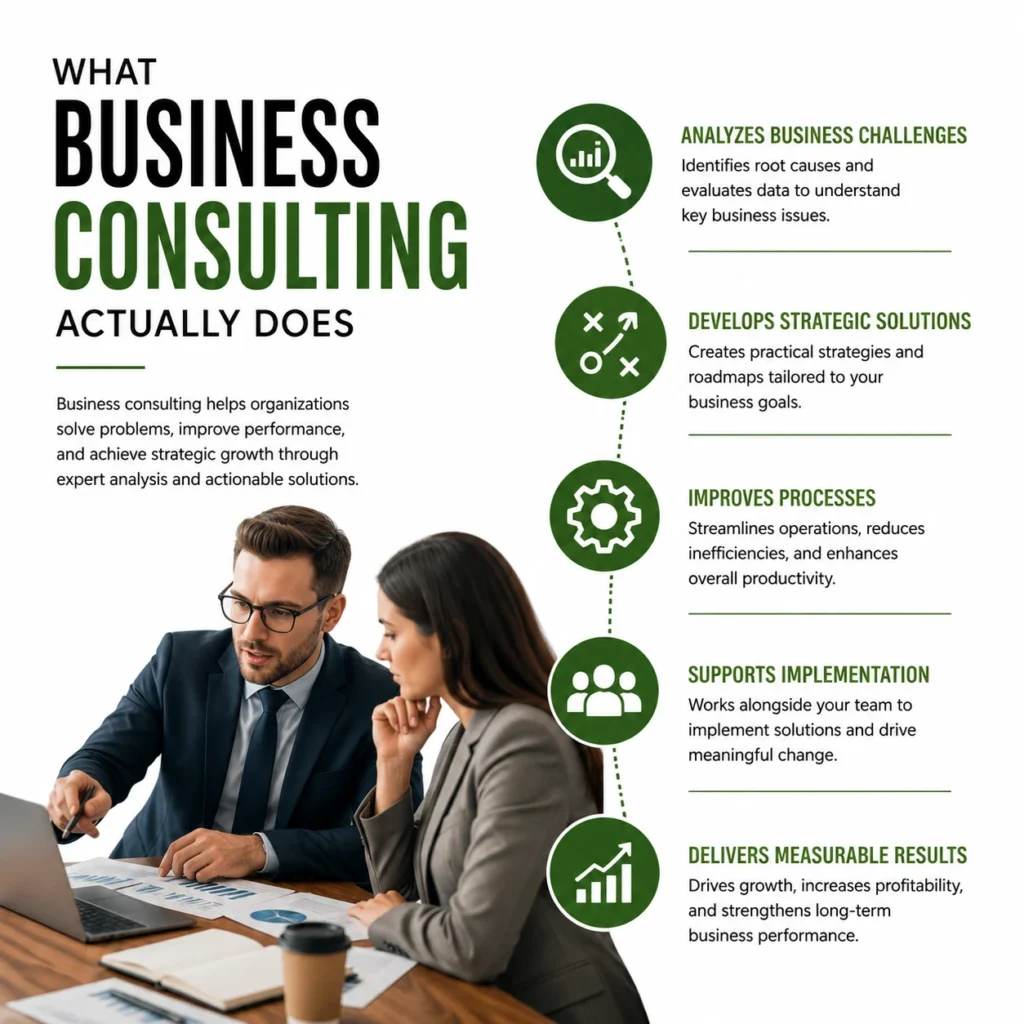
Business consulting is a completely different ballgame. A consulting firm is hired to solve a specific business problem: fix a broken supply chain, reorganize a department, enter a new market, or cut operating costs. Consultants collect data, interview stakeholders, benchmark against competitors, and present a report or implementation plan with concrete recommendations.
The management consulting services market was valued at roughly $374.67 billion in 2025 and is expected to reach $471.39 billion by 2031, per Mordor Intelligence. Firms like McKinsey, BCG, and Bain dominate the top end; boutique firms handle more focused engagements.
Consulting engagements are usually shorter and more intense than coaching relationships. A project might run for eight weeks or eight months, but it has a defined start, middle, and end, with a deliverable at the finish line.
Core Differences Between Executive Coaching and Business Consulting
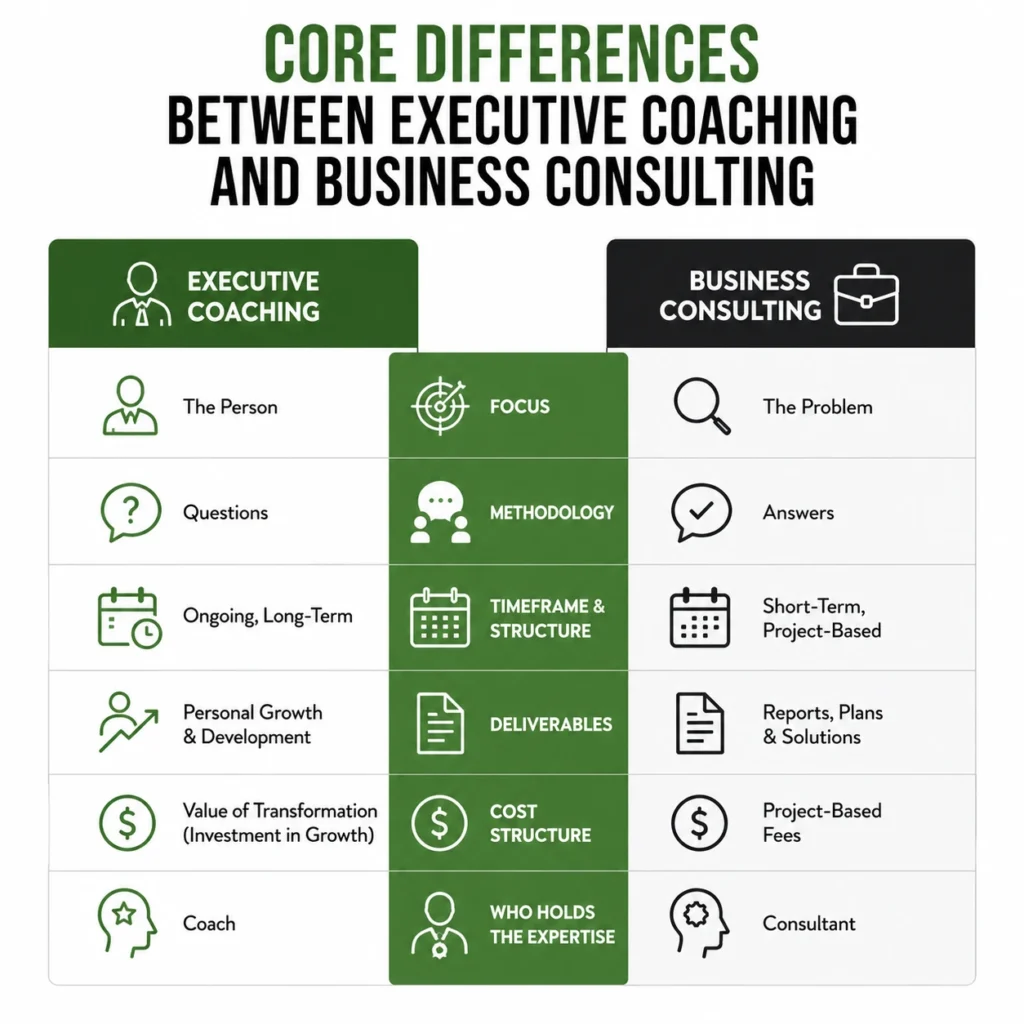
Focus: The Person vs. The Problem
Coaching centers on the individual leader. It builds self-awareness, decision-making skills, and emotional regulation so the person can navigate whatever challenge comes next, not just the one on the table today. Consulting centers on the organization. It diagnoses a specific business problem and prescribes a fix, regardless of who is running the team.
Methodology: Questions vs. Answers
A coach asks questions and helps a leader arrive at their own conclusions. A consultant analyzes data and hands over answers, frameworks, and recommendations. Neither approach is better in isolation; they simply serve different needs. A leader who already knows what to do but struggles to execute it under pressure needs a coach. A team that genuinely doesn’t know the right strategy needs a consultant.
Timeframe and Structure
Coaching relationships tend to be longer and more open-ended, often lasting six to twelve months with recurring sessions. Consulting projects are typically scoped tightly, with milestones, deliverables, and an exit date built into the contract from day one.
Deliverables
A coaching engagement produces a stronger, more self-aware leader. There’s rarely a slide deck at the end. A consulting engagement produces tangible outputs: a strategic plan, a process redesign, a market-entry analysis, or a cost-reduction roadmap that the client team then implements.
Cost Structure
Coaching is usually billed hourly or through a retainer tied to session count, with a VP-level engagement often running $7,500 to $25,000 over six to twelve months. Consulting projects are priced per engagement and can range from tens of thousands of dollars for a focused boutique project to millions for enterprise-wide transformation work at a top-tier firm.
Who Holds the Expertise
In coaching, the leader is the expert on their own business; the coach is the expert on human behavior and development. In consulting, the firm brings external expertise, benchmarks, and best practices the client organization may not have in-house.
When to Choose Executive Coaching
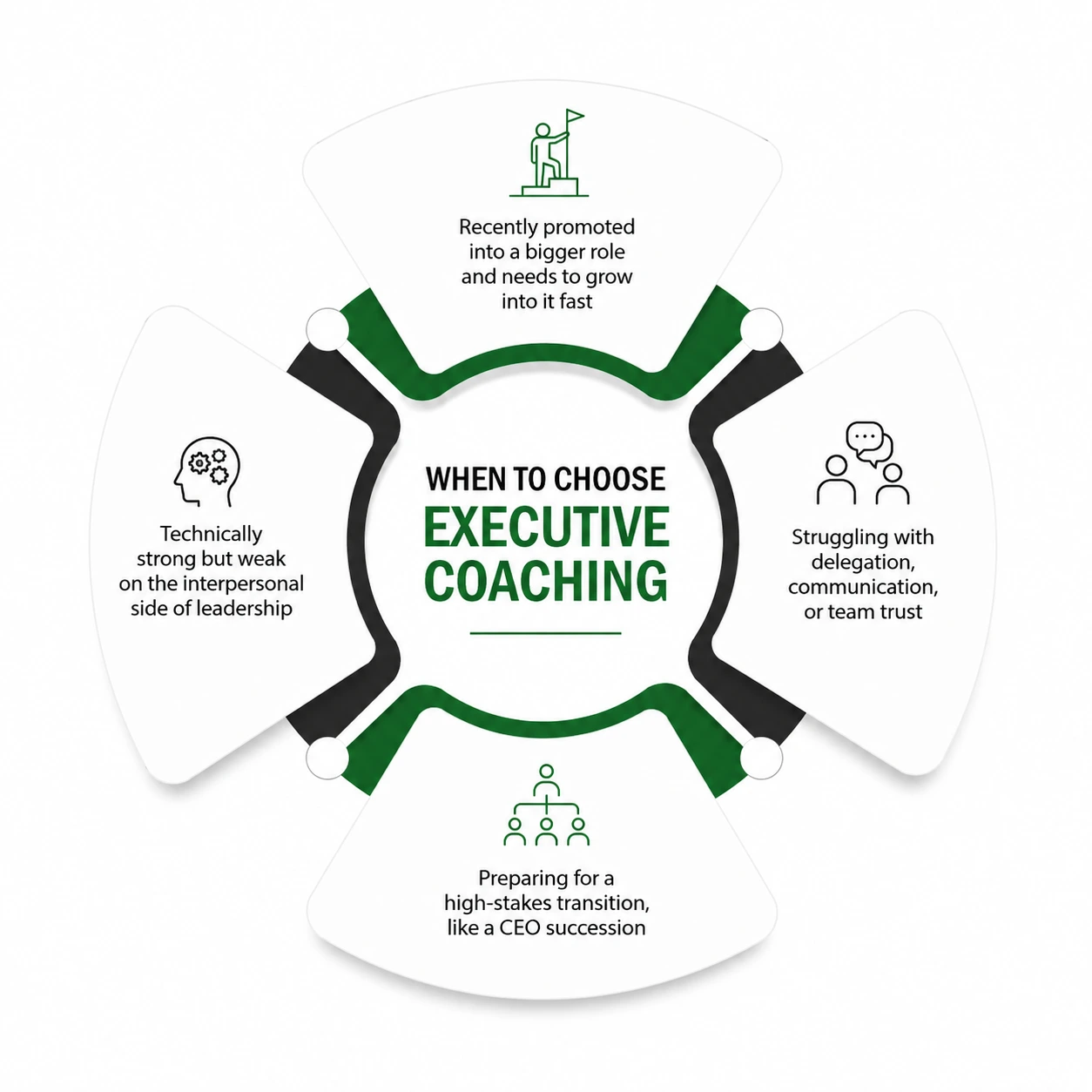
Executive coaching fits best when the challenge is personal rather than structural. Consider it when a leader is:
- Recently promoted into a bigger role and needs to grow into it fast
- Struggling with delegation, communication, or team trust
- Preparing for a high-stakes transition, like a CEO succession
- Technically strong but weak on the interpersonal side of leadership
Research on leadership transitions, including work referenced by McKinsey, shows that the first 90 to 180 days in a new senior role disproportionately shape long-term success. That early window is also when coaching tends to deliver the strongest return, since the leader is most open to feedback and the cost of a misstep is highest.
When to Choose Business Consulting
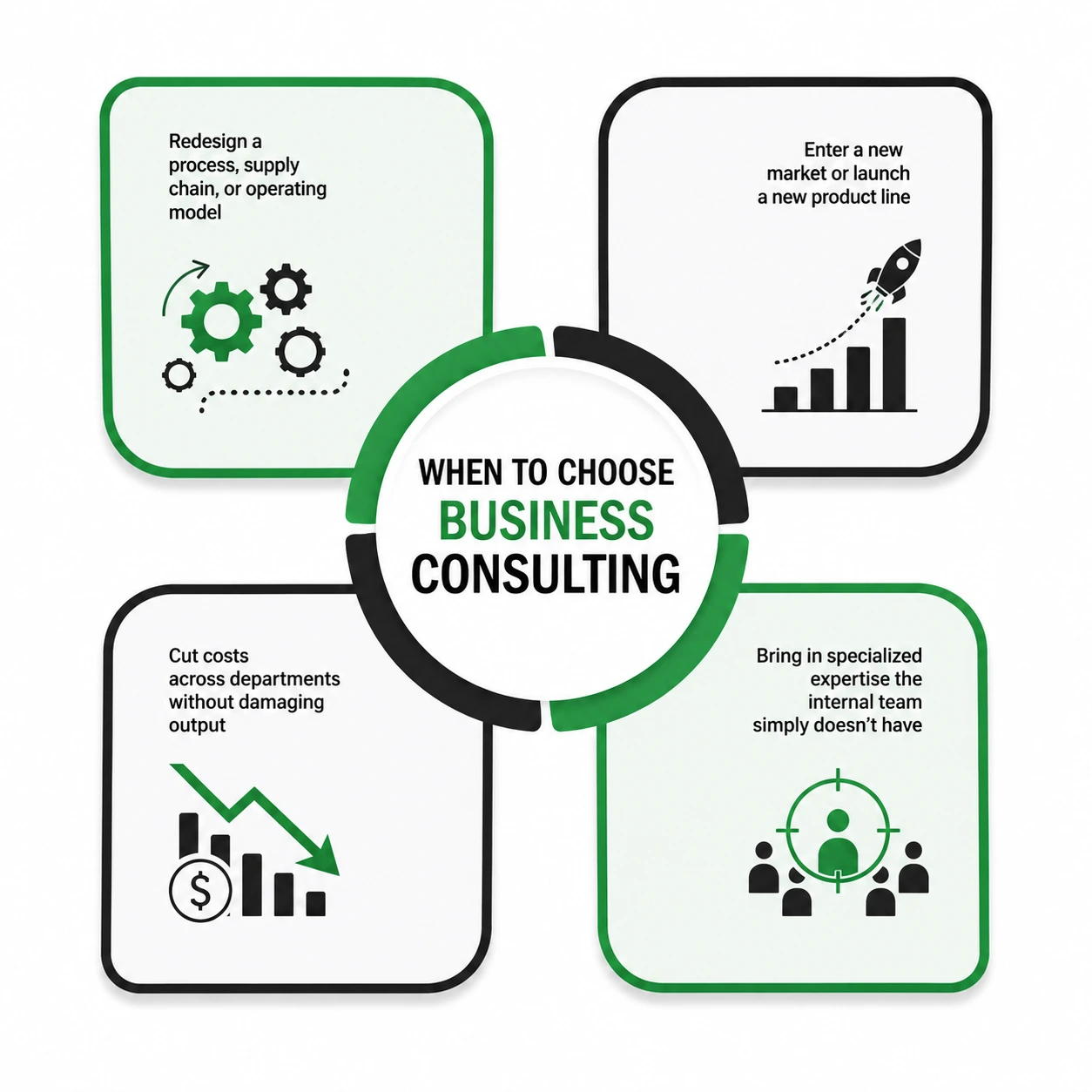
Business consulting fits best when the problem lives in the organization’s structure, strategy, or operations rather than in one person’s behavior. It makes sense when a company needs to:
- Redesign a process, supply chain, or operating model
- Enter a new market or launch a new product line
- Cut costs across departments without damaging output
- Bring in specialized expertise the internal team simply doesn’t have
Can You Use Both Together?
Yes, and many organizations do. It’s common for a company to hire a consulting firm to redesign its strategy, then bring in an executive coach to help the leadership team actually execute that new strategy with confidence. The consultant fixes the blueprint; the coach helps the people responsible for building it grow into the job.
Conclusion
The real difference between executive coaching and business consulting comes down to what needs to change: the person or the plan. Coaching invests in a leader’s growth over time through guided reflection and accountability. Consulting solves a defined business problem through outside expertise and a clear deliverable. Neither replaces the other, and plenty of organizations benefit from using both at different stages of growth. The smartest move is to get honest about what’s actually broken before writing the check, because hiring the wrong kind of help rarely fixes anything.
Ready to Decide? Start With One Question
Before reaching out to anyone, ask yourself this: is the gap in how someone leads, or in how the business operates? If it’s the leader, start a conversation with a certified executive coach. If it’s the business, scope a project with a consulting firm that has real experience in your industry. Either way, don’t sign anything until the provider can explain exactly how they’ll measure progress and what “done” looks like.